
Students in the STEAM 10 program at St. Michaels University School shared a series of inventive assistive device prototypes this week, presenting their designs in the Copeland Lecture Theatre as part of an ongoing collaboration with the Victoria Hand Project (VHP).
Working in teams of three or four, students were tasked with designing tools that could integrate with the organization’s 3D-printed prosthetic arms to help prosthetic arm users perform everyday tasks more easily. Over five weeks, with just two class sessions per week to develop their ideas, students moved from concept sketches to functioning prototypes — testing, refining and often failing along the way.
That process of trial and error was not only expected, it was encouraged.
“If you are worried about failing, you are never going to come up with a creative design,” said Physics teacher Kristy Martens, who led the project. “We would rather have students fail the first 30 times and learn something each time. The more failures, the better.”
Designing Real-world Solutions
The project is part of an ongoing partnership with the Victoria Hand Project, a Canadian charity that designs and distributes low-cost prosthetic arms using 3D printing technology.
“Here in Victoria, we do the engineering, design, software development and testing,” explained Michael Peirone, CEO of the Victoria Hand Project. “Then we partner with clinics around the world — often in developing countries or conflict-affected areas — and teach them how to create these custom prosthetic devices locally.”
The organization has worked in 11 countries, helping individuals regain independence through accessible prosthetic technology. Through the collaboration with SMUS, STEAM 10 students are challenged to design assistive tools that work with the prosthetic arm to help users carry out everyday tasks more independently and with greater confidence.
“We leave the challenge open and let students explore their creativity,” Peirone said. “We’re always excited to see what they come up with.”
Five Teams, Five Solutions
The students approached the design challenge from several different angles.
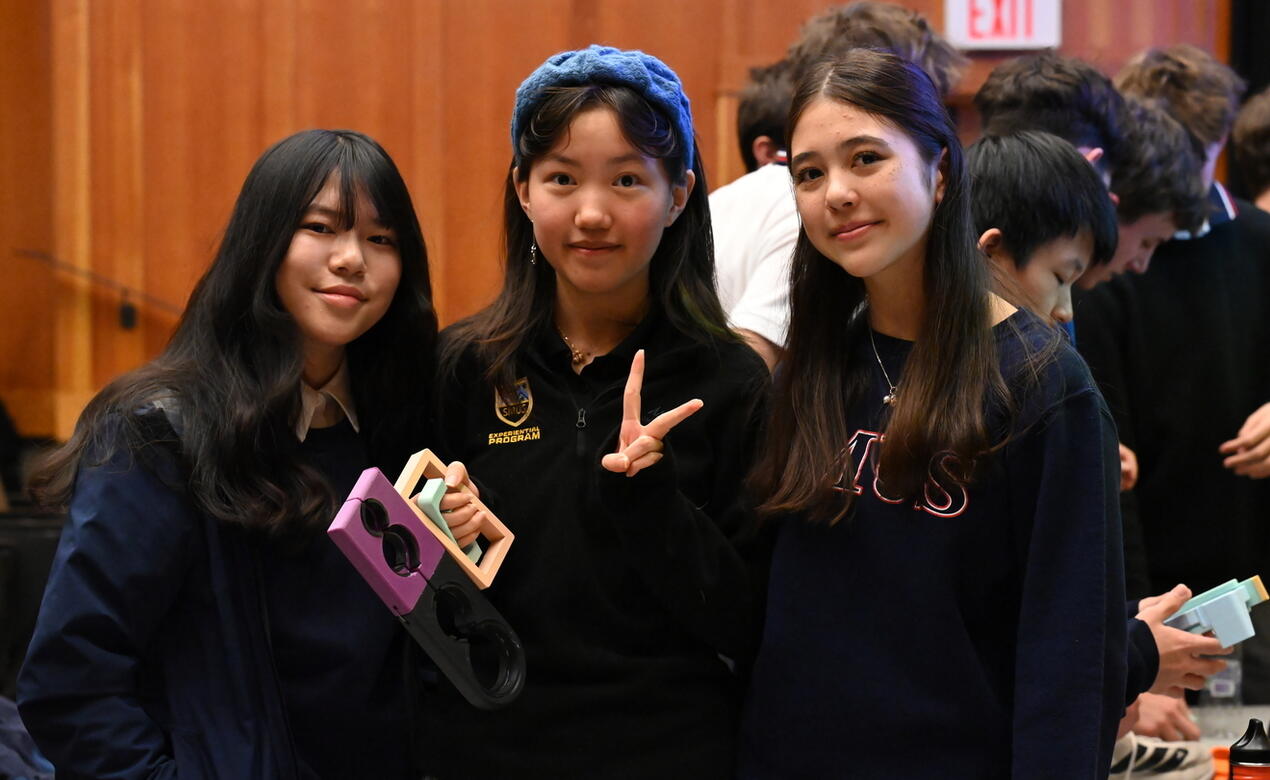
Two teams focused on improving how someone using a prosthetic hand might grip or open bottles and jars. First to present were Jolin Zhao, Farrah Cheung and Sakura Tanaka, who designed a device that attaches directly to the prosthetic handle provided by the Victoria Hand Project. Featuring two silicone-lined openings of different sizes, the tool grips a lid securely so the user’s other hand can twist and open the container.
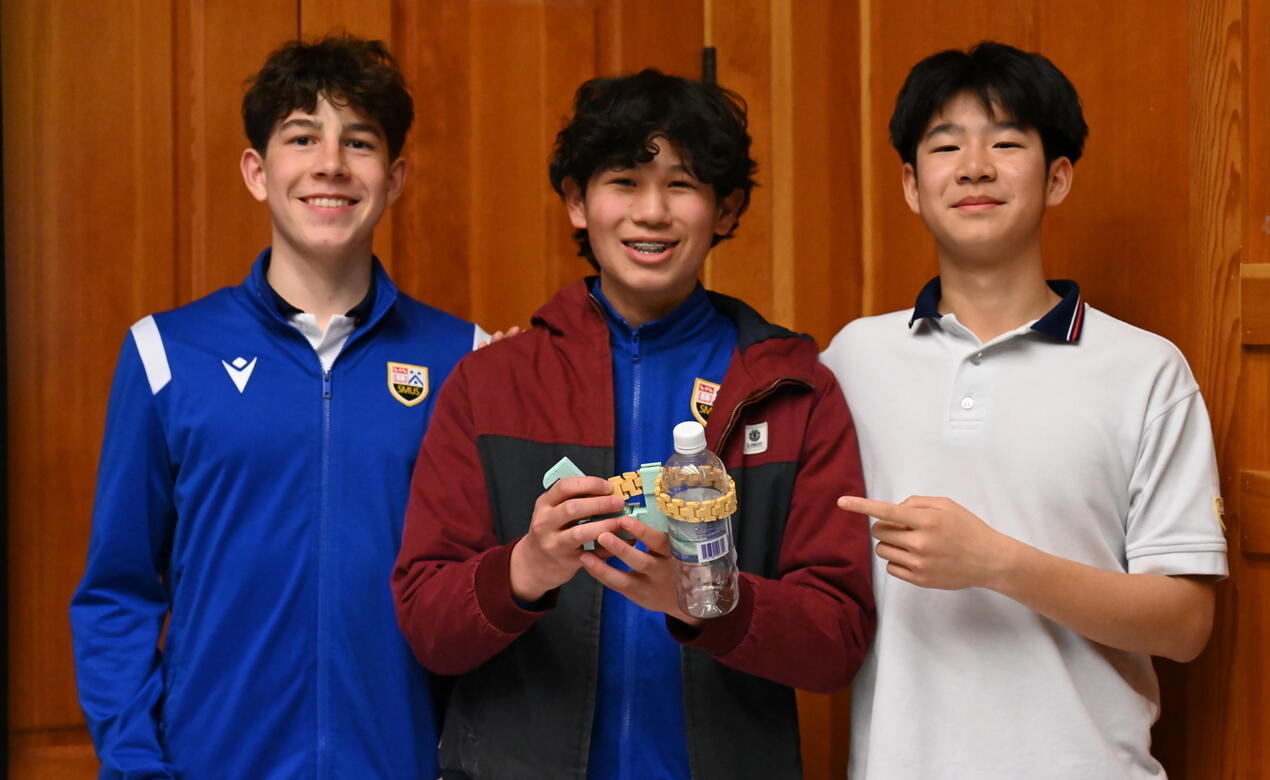
Etienne Denus, Ben Cusack and Steffen Wang experimented with multiple gripping mechanisms before arriving at their final design. Early versions used chains, gears and string before the group developed a lever-activated chain system that tightens around bottles or cups of different sizes.
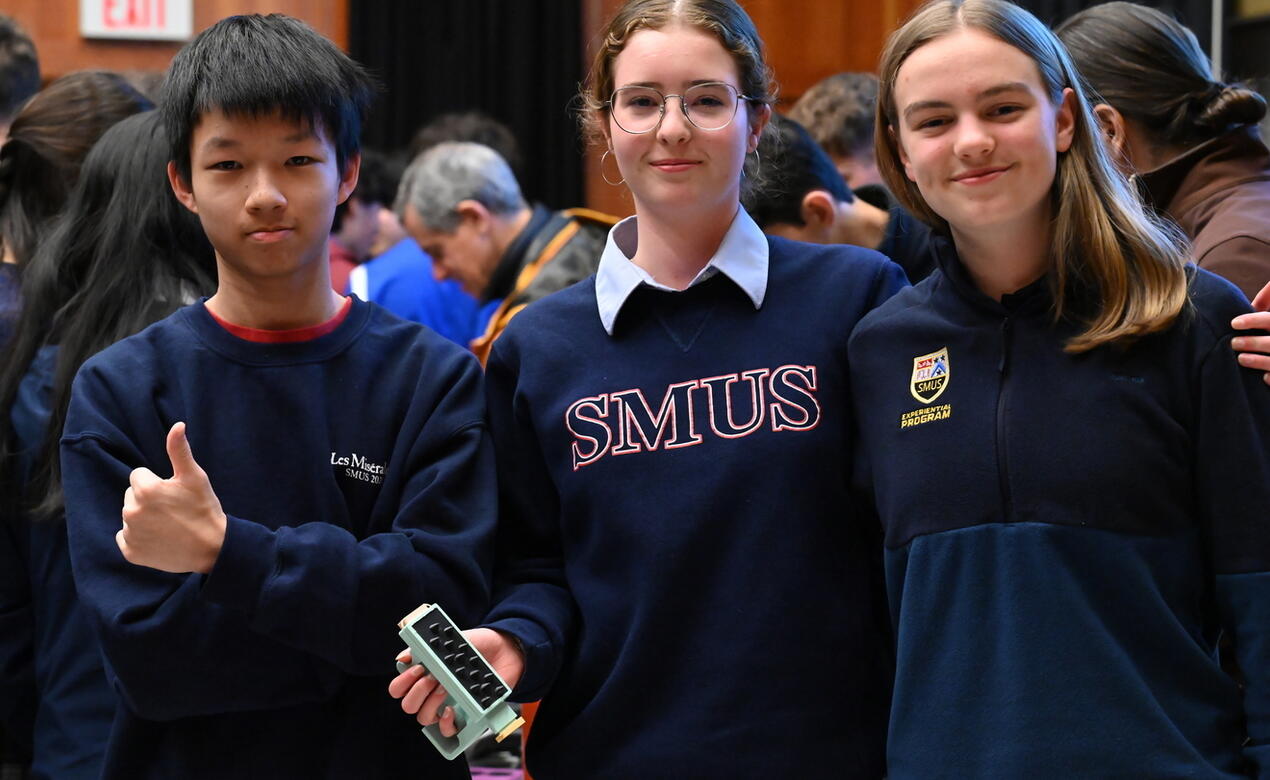
A more personal challenge was tackled by Elsa Dukes, Rachel Oliver and Leo Mao: shampooing one’s hair in the shower. Their mechanical hair scrubber attaches to the prosthetic grip and uses a flexible rubber band mechanism to create a back-and-forth motion that massages the scalp. The device was designed to make this everyday routine easier to manage independently, an important step toward greater confidence and self-sufficiency.
Designing the scrubber proved to be the biggest obstacle. After several attempts with molding materials that were too soft, the team switched to a TPU filament that held the shape of the spikes more effectively. In total, the group produced about 30 prototypes before arriving at their final design.
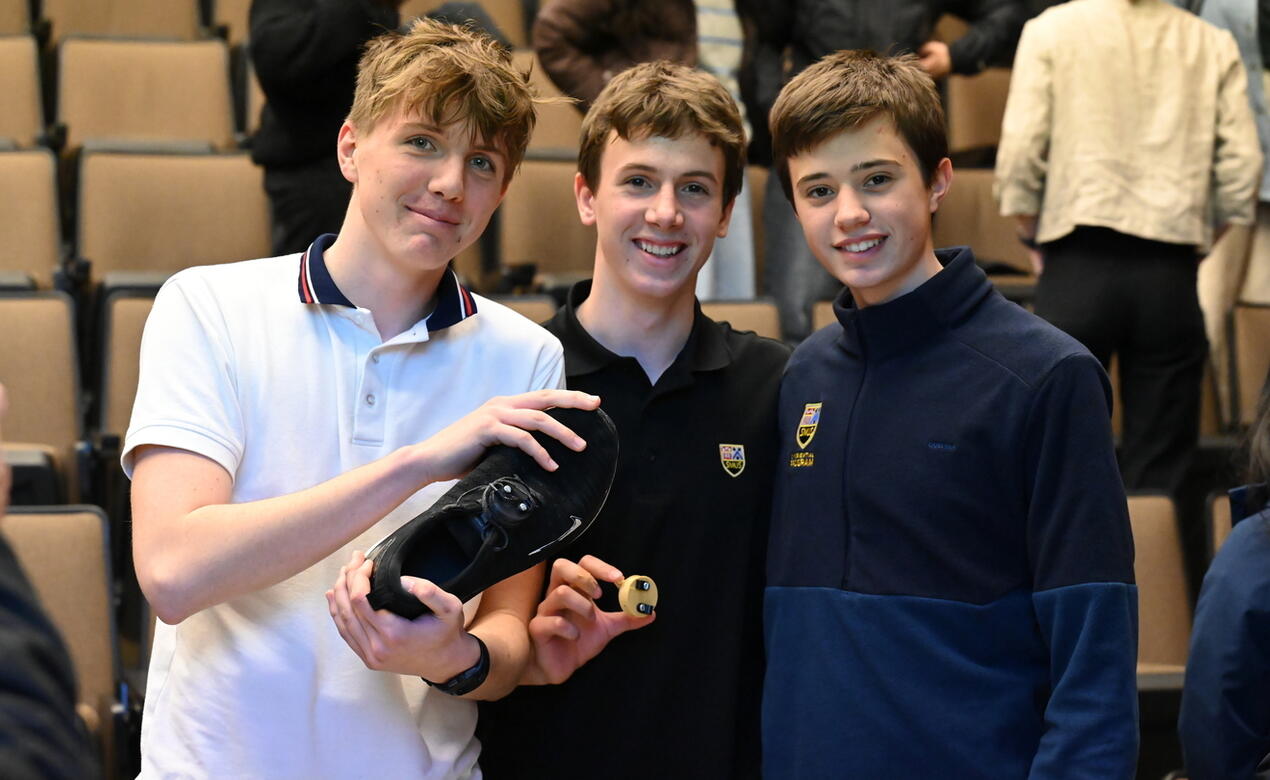
Next up, Liam Kingsbury, Mateo Laca Swets and Jonah Wilkins focused on a challenge many people have never had to consider: how to tighten shoelaces using only one hand. Inspired by BOA bindings on ski boots, the students created a ratcheting circular device that mounts to a shoe and tightens the laces with a satisfying clicking motion as it rotates. A simple lift releases the mechanism to loosen the laces.
During the presentation, a volunteer, Ben Cusack, demonstrated how difficult it is to tie a shoe with one hand before trying the device, which quickly tightened the laces with a few turns.
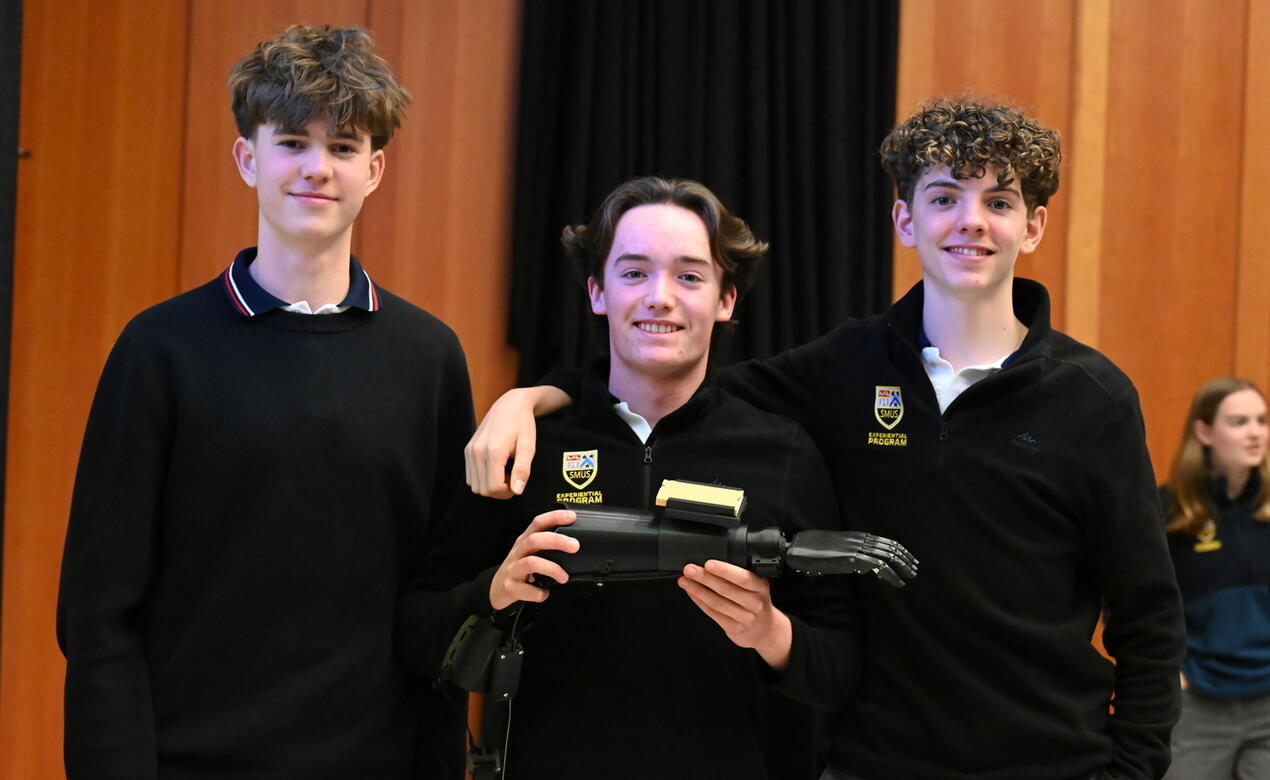
The final team, Lincoln Wuth, Wil Hamilton and Pearce Wade, addressed everyday financial tasks, designing a forearm-mounted wallet inspired by minimalist wallet designs. A button mechanism allows cards to pop out for easy access, while cash can be retrieved securely without risk of cards sliding out unintentionally.
Learning Through Experimentation
Martens said the design process was just as important as the finished devices.
This year’s STEAM 10 cohort, she noted, stood out for both their curiosity and their support for one another as they worked through the inevitable challenges of design and engineering.
“They are incredibly curious,” she said. “Anywhere we take them, they engage with people and ask questions. And they are very supportive of each other, which makes all the failure that comes with design much more manageable.”
For many students, the project also offered a chance to think about problems they might never have encountered themselves.
Several presenters reflected on how unusual it felt to design for challenges they had never personally experienced, a reminder that engineering often begins with understanding someone else’s perspective.
By the end of the presentations, it was clear that the devices represented far more than technical exercises. They demonstrated how creativity, empathy and persistence can come together to solve real-world challenges.

Victoria Hand Project

STEAM 10 x Victoria Hand Project

STEAM 10 x Victoria Hand Project


