
When Miku Asai '27 stepped off her flight and into Victoria Airport for the first time alone, something registered that she had never quite felt before. She had travelled internationally before, but always with her family. This time she was 15, arriving from Tokyo to begin Grade 10 at St. Michaels University School, and the airport was full of sounds she could not attach to anyone she knew.
"It was my first time not hearing Japanese around me," she said.
This year, 246 boarding students from 30 countries are part of the SMUS community. Each of them has a version of that arrival story — a moment when the familiar drops away and something new has to take its place. For Grade 11 students Miku Asai, Lilly Dolderer, Henri Jungkind and Keiichi Ishihara, that experience has become about something larger than academics or athletics. It has become about finding their voice, in every sense of the word.
Three Seconds of Courage
Henri Jungkind arrived from Düsseldorf, Germany, speaking three languages and with a year of living in London behind him. His English was strong, but the first weeks still required adjustment.
"I was used to textbook English," he said. "Not really how people speak, with slang words and shortcuts."
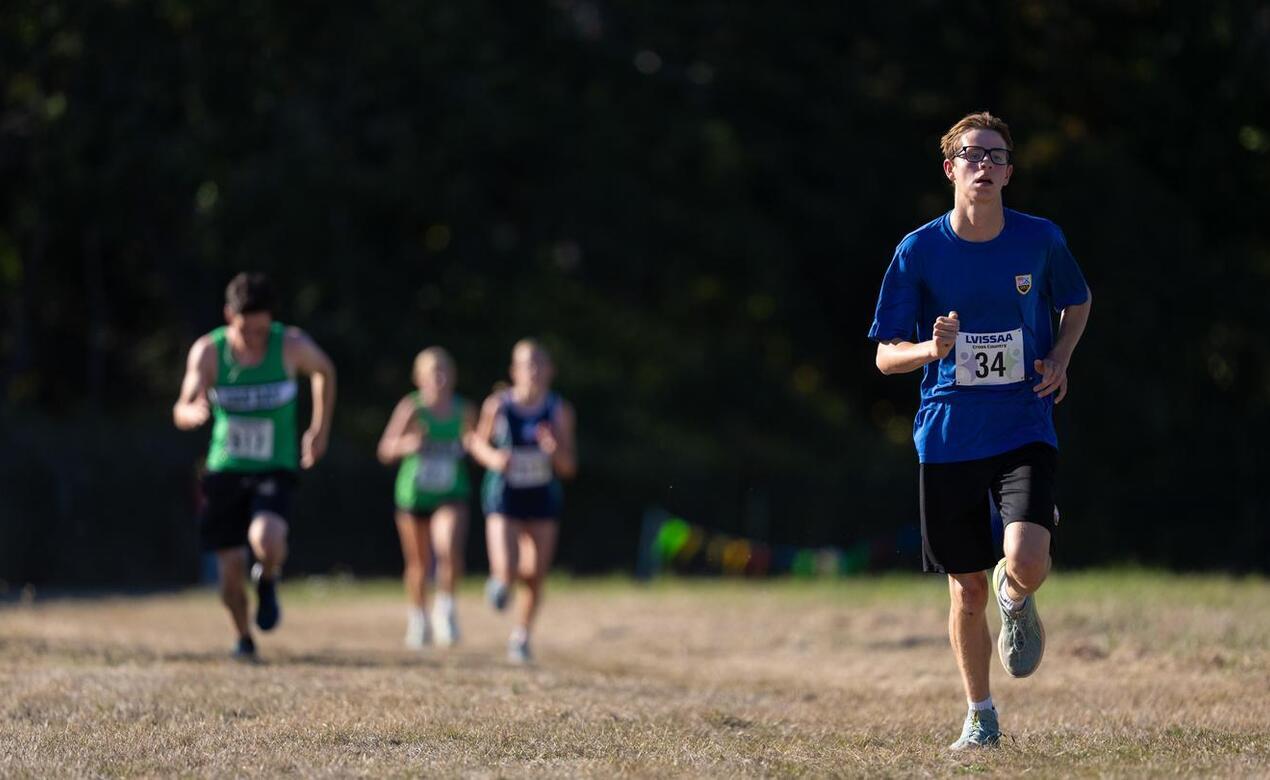
He had planned to play soccer, a sport he had played for 13 years. When he did not make the team, he tried cross country instead, then squash, then track and field. He qualified for provincials in cross country and found he loved running. Through Outdoor Leadership, he went sea kayaking near Tofino and winter camping. None of it would have happened, he said, if the soccer tryout had gone differently.
The moment he is most proud of had nothing to do with athletics. He had volunteered to give a speech in a chapel service led by his boarding house before he had fully thought it through, and spent much of the writing process regretting the decision. He delivered it anyway.
"After I presented the speech in chapel, I was feeling so great because I did it," he said.
His advice to students arriving nervous: "Use those three seconds of courage. In the end, you'll be proud of yourself."
A New Language, a New Version of Yourself
Lilly Dolderer came to SMUS from Bayreuth, Germany, excited about boarding life but uncertain about one thing in particular.
"If you don't speak your first language, you can be seen as a completely different person," she said.
Back home her friends would describe her as extroverted, talkative and adventurous. In her first months at SMUS she was quieter, not by choice but by the effort of operating in another language. Following classroom discussions was hard. Speaking up was harder.
"The pace is really fast," she said. "I was often scared to ask questions in front of my classmates."
Her English Language Learning (ELL) classes offered a different environment. With only six or seven students in the room, everyone navigating the same challenges, she felt confident enough to ask questions freely. Outside the classroom, she read, watched English television and gave herself time. The small moments that had once felt difficult gradually became easier.
Near the end of her year, she reflects on boarding life with something close to disbelief at her own good fortune.
"Sometimes I just can't believe that this is my life right now," she said.
Freedom to Choose Her Path
Miku Asai's first days at SMUS were eventful in ways she hadn't anticipated. One of her suitcases went missing on arrival, leaving her borrowing pyjamas from her houseparent until it was located the following evening. The first two weeks, she said, were genuinely hard.
What helped her find her footing academically was the ELL program. With small class sizes and individualized support, teachers could work with her on essays, presentations and subject-specific vocabulary. When science terminology proved difficult, her ELL teacher arranged a vocabulary sheet with her science teacher.
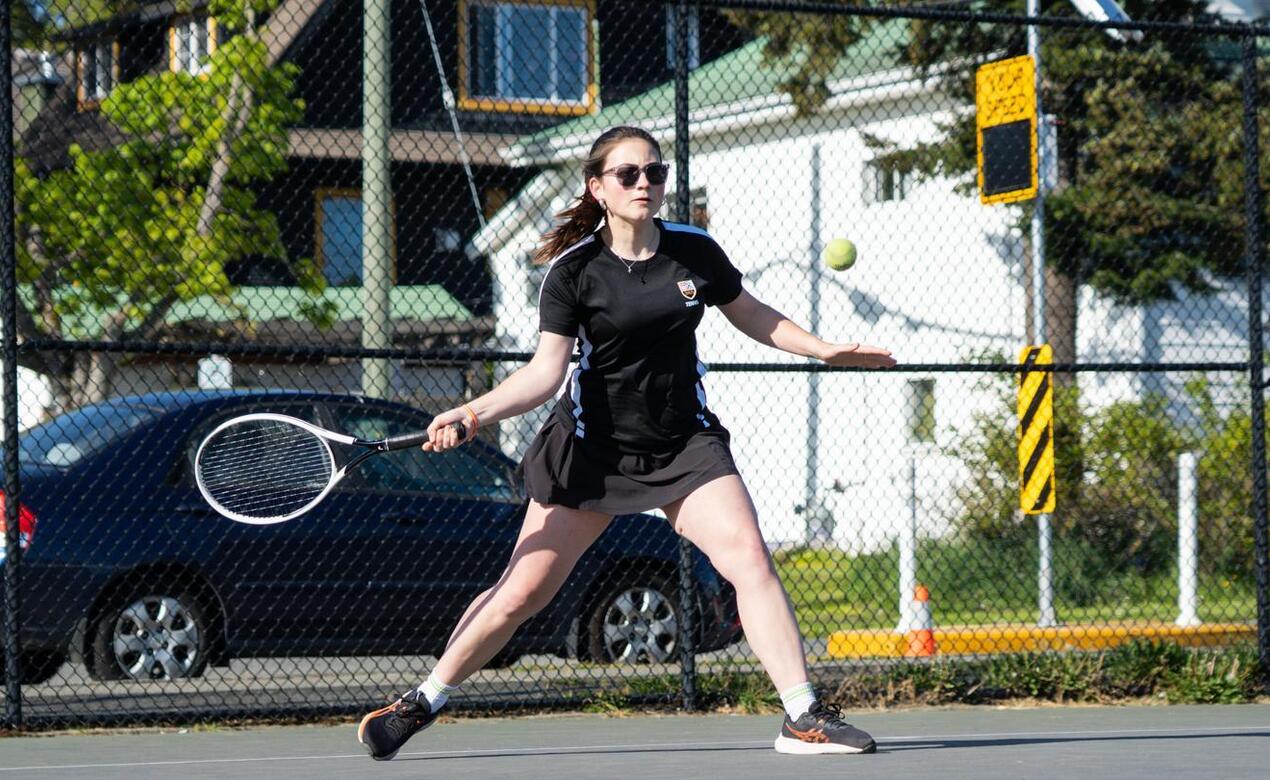
Beyond the classroom, Miku played tennis in Grade 10 and went to provincials. She helped backstage on the school's production of Les Misérables. Now in Grade 11, she is one of the executives of the Howard Business Club, which has more than 100 members.
One of the biggest differences she noticed from school in Japan was the freedom to choose her own path.
"People are so international," she said. "Experiencing diversity was a really big thing for me."
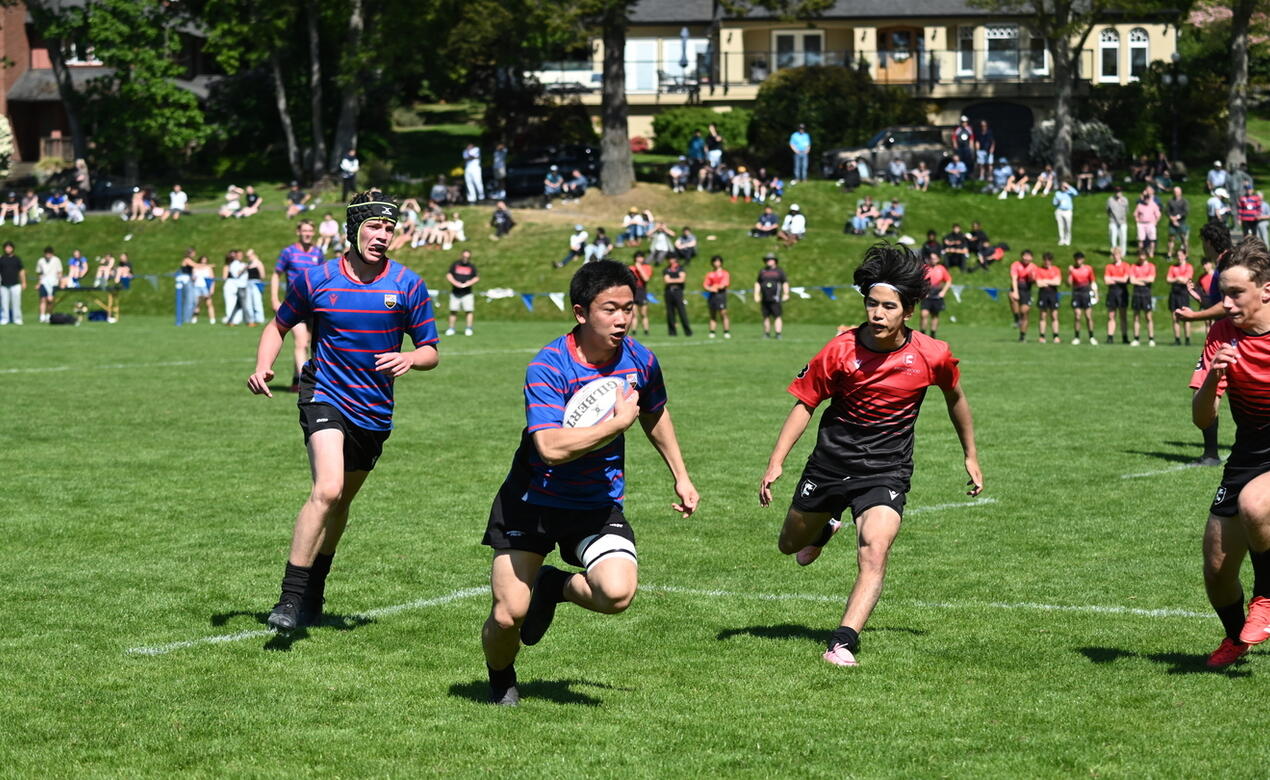
Finding His Voice on the Rugby Field
Keiichi Ishihara also came from Tokyo, and he acknowledged that his first weeks were the most difficult. His English was not yet strong enough to follow conversations, and he spent most of his early time with other Japanese-speaking students while he adjusted.
The challenge came into sharpest focus during a Global Issues class debate in his first term. Representing Taiwan, he found himself unable to clearly articulate what he wanted to say.
"I felt really embarrassed in class," he admitted.
What helped most, he found, was simply talking to more people. Through Senior Rugby especially, he found coaches and teammates who were welcoming and patient, and the sport gave him both a reason to communicate and the confidence to do so.
"Rugby helped me talk to many people and become more comfortable," he said. "I started to understand how I want to speak English."
By the end of the year he had done something he wouldn't have predicted on arrival: he gave a speech in English, in front of people, on purpose.
"I used to be quiet and never imagined giving a speech in English in front of people," he said. "I was still very nervous. But I also felt proud of myself."
What Stays
For all four Grade 11 students, the experience of studying abroad has meant navigating uncertainty, building confidence in an unfamiliar language and discovering a stronger sense of independence.
Carol Adamson, Senior School English, ELL and Social Studies teacher, said the students' experiences reflect something she sees every year.
"These students are truly inspiring in the way they embrace their time at SMUS," she said. "It takes great courage to live and learn in a new environment and in another language. Their open-mindedness and willingness to dive into new experiences set a wonderful example for our entire community to aim for."
Henri put it more simply, reflecting on his year abroad.
"It wasn't easy," he said, "But it was definitely worth it."


