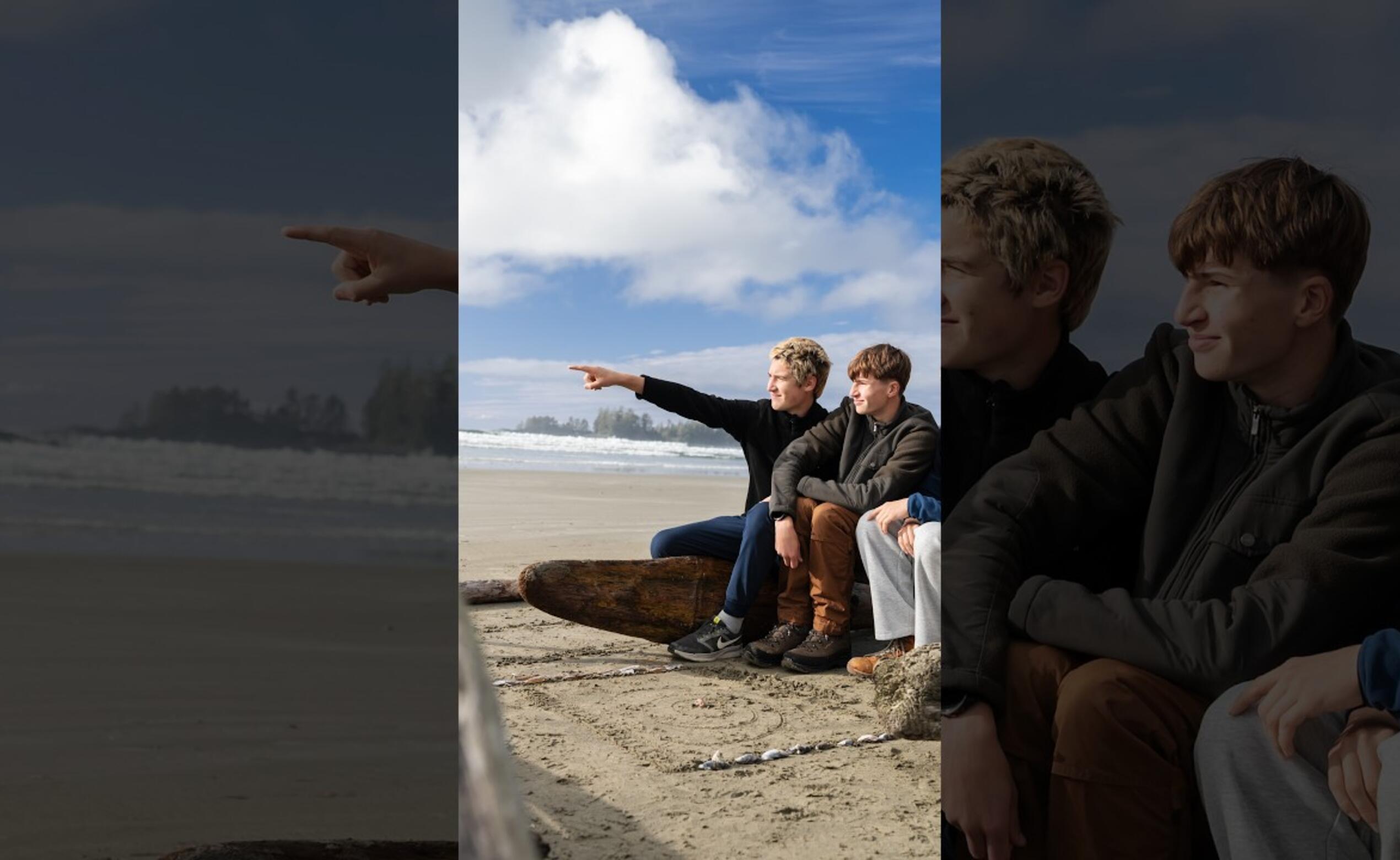
The Grade 10 Experiential Program at St. Michaels University School brings together two distinct learning opportunities: STEAM 10 and Ridgelines and Coastlines.
Each program offers a different way to explore the world beyond the classroom. STEAM 10 connects science, technology, engineering, art and mathematics with the natural environment, while Ridgelines and Coastlines combines outdoor education with Indigenous perspectives, cultural learning and environmental stewardship.
Although students pursue different areas of focus, every month they explore an overnight opportunity to learn. In October, both cohorts traveled to Tofino together and shared experiences along the way—creating opportunities for their learning to intersect.
From Oct. 26-29, STEAM 10 students discovered how science, art, engineering and the natural world intersect through four days of hands-on exploration in Tofino, British Columbia.
The annual overnight trip for this program in Clayoquat and Tofino offered an opportunity to bring classroom concepts to life and is where learning becomes something the students can see, measure, question and experience firsthand. The land becomes a living laboratory, connecting their studies with the remarkable natural environment of the West Coast.
Finding Inspiration in the Landscape
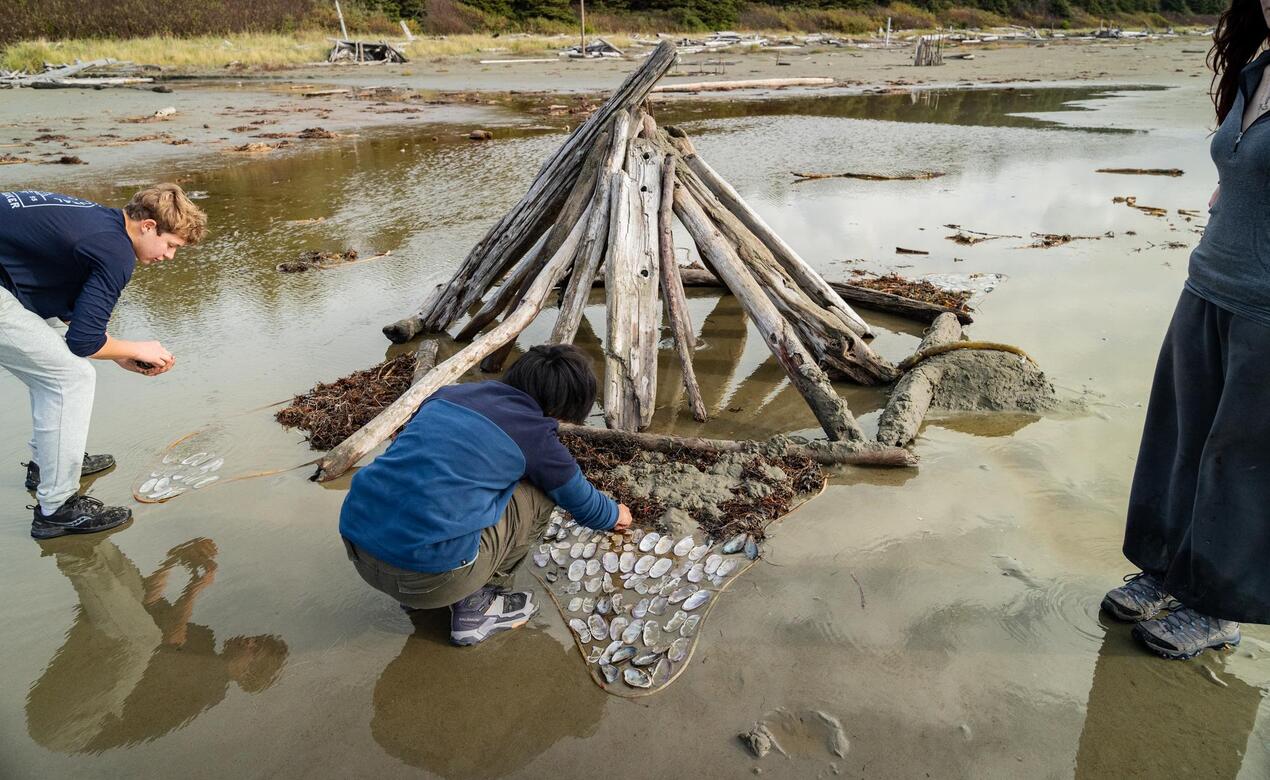
One of the first opportunities to bring both cohorts together was an environmental art workshop on Long Beach with Senior School Art Teacher Krista Jones.
Inspired by the work of British artist Andy Goldsworthy, students worked in small groups to create temporary installations using materials found along the shoreline, including kelp, shells, rocks, driftwood, sand and water.
Rather than beginning with a predetermined design, students were encouraged to let the environment guide their creative process. The colours, textures, shapes and materials available on the beach all influenced what they created.
Long Beach became an essential part of each piece. Students considered how their artwork would exist within the landscape, how the surrounding water and light might change its appearance, and how natural materials could be used in unexpected ways.
Art continued throughout the trip through sketchbook work, journaling and landscape studies, giving students opportunities to capture the changing clouds over the mountains and respond to the movement and sounds of the waves.
The Science of a Living Coastline
On Long Beach, students explored the physics of waves, buoyancy and forces with Senior School Physics Teacher and STEAM 10 lead Kristy Martens.
Using metre sticks, string, driftwood, timers and other measuring tools, students developed their own methods for measuring tidal patterns and tracking data against the changing shoreline. The lesson had them thinking about concepts of measurement, observation and scientific inquiry.
The coastline also became a setting for exploring the scale of the solar system.
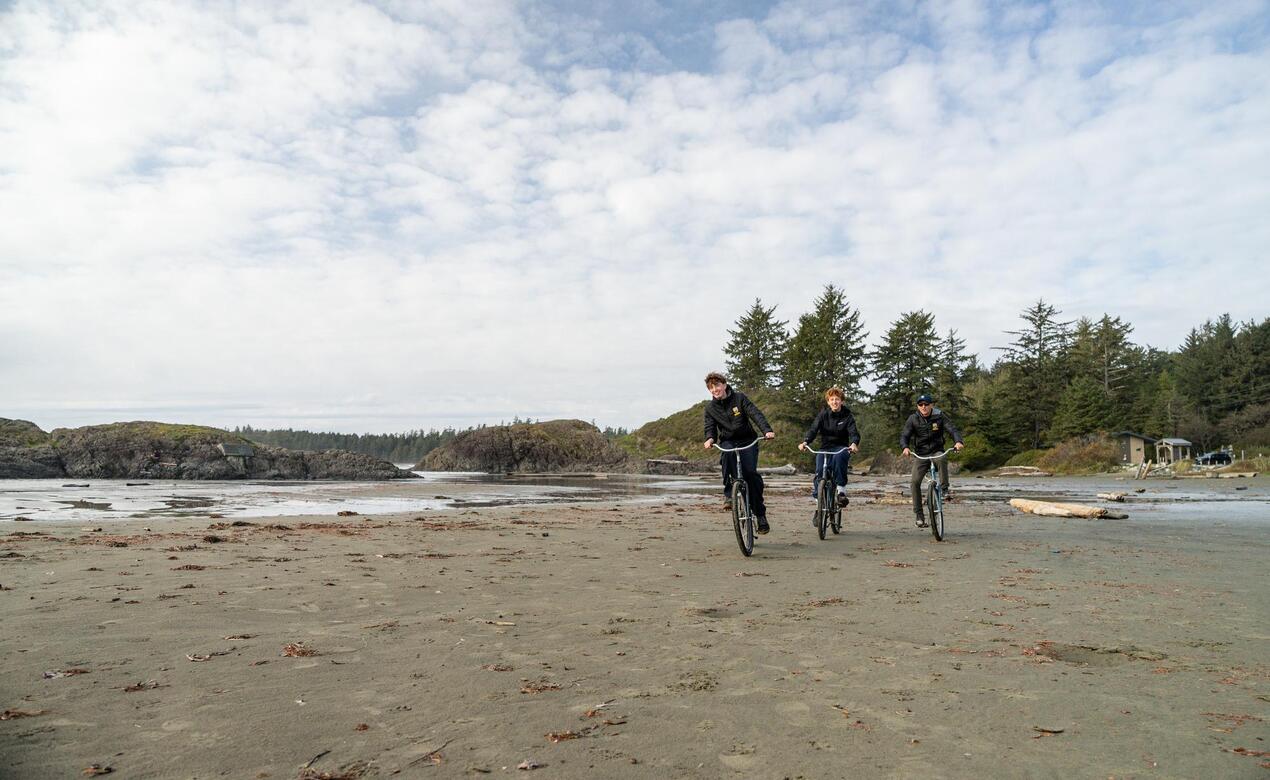
They were given the freedom to choose their own methods for creating scaled-down models of the solar system, working to represent the proportionally correct distances between planets. Some students chose to use the rental bicycles they had ridden to the beach that morning, incorporating their own tracking inventions, while others experimented with different approaches. The activity provided a hands-on way to grasp the immense distances between objects in space.
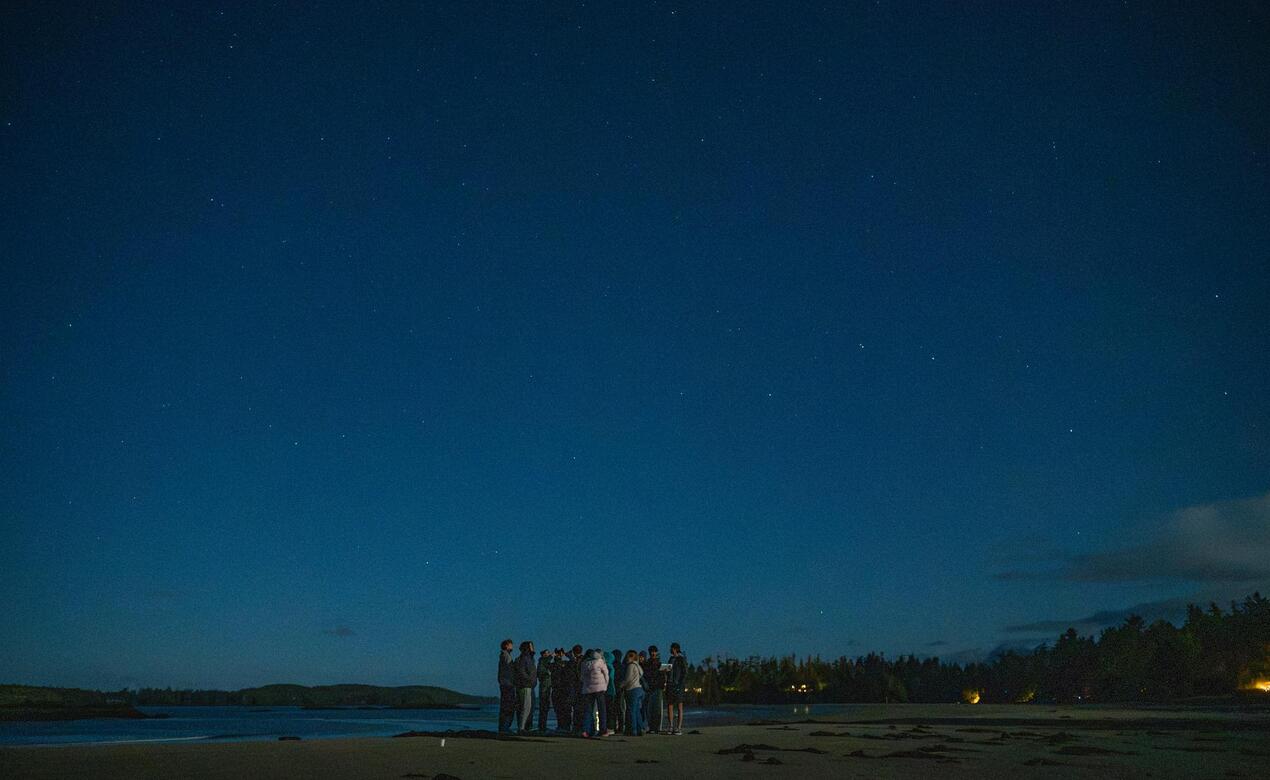
During an evening astronomy session on Mackenzie Beach with Senior School Engineering Teacher Christopher Csaky, students turned their attention skyward. They explored distant galaxies, observed Saturn through binoculars and began measuring the speed of the Earth's rotation.
Beyond physics and astronomy, the STEAM 10 program incorporated marine science and biology.
On the way home, students visited the Ucluelet Aquarium, where they explored coastal marine life through its Collect and Release exhibit. The experience offered another opportunity to understand the biodiversity of the region and the interconnected ecosystems that make the West Coast unique.
Together, these experiences encouraged STEAM 10 students to look at the coastline as an interconnected system, where tides, plants, wildlife, weather and human activity all influence one another, with Tofino being the perfect place to do so.
Learning By Experiencing
While STEAM 10 has its own distinct academic focus, the experience of travelling to Tofino alongside the Ridgelines and Coastlines cohort creates opportunities for students to learn from one another.
Both groups explored Long Beach through the shared environmental art activity, and both spent time considering the relationship between people and the natural environment, albeit from different perspectives.
The four days also offered something less easily measured: time away from the usual school routine. Shared meals, outdoor activities and conversations encouraged students to be present, engage with one another and pay closer attention to their surroundings.
Learning doesn't stop at the classroom door
The Grade 10 Experiential Program at SMUS recognizes that meaningful learning can happen in many different settings.
STEAM 10 and Ridgelines and Coastlines are two distinct programs, each offering students a different way to connect with the world around them. Although their academic approaches differ, they travel together to Tofino and share experiences that create opportunities for their learning to intersect.
For STEAM 10 students, four days on the West Coast demonstrated that science isn't confined to a textbook or laboratory. Sometimes, understanding the world begins with standing on a beach, looking up at the night sky, measuring the movement of the tide and asking questions.