
Today, an extraordinary amount of the world's knowledge can fit in the palm of your hand. A quick search, a voice command, or a prompt to an AI assistant can answer nearly any question that crosses the mind. With so much available instantly online, it might be easy to assume that the traditional school library has become a quieter, less essential place.
Step inside the St. Michaels University School’s Senior School Snowden Library, however, and a different picture emerges. Here, books are still being discovered, discussed, and carried home in backpacks, their weight a small price to pay for the ideas they hold. Students browse displays, flip through pages, and occasionally lose themselves entirely in a story that captures their imagination.
In many ways, the library offers something increasingly rare: the chance to slow down and explore ideas through long-form reading. While digital platforms deliver a steady stream of information, books invite a different kind of engagement, one that asks readers to linger, reflect, and imagine.
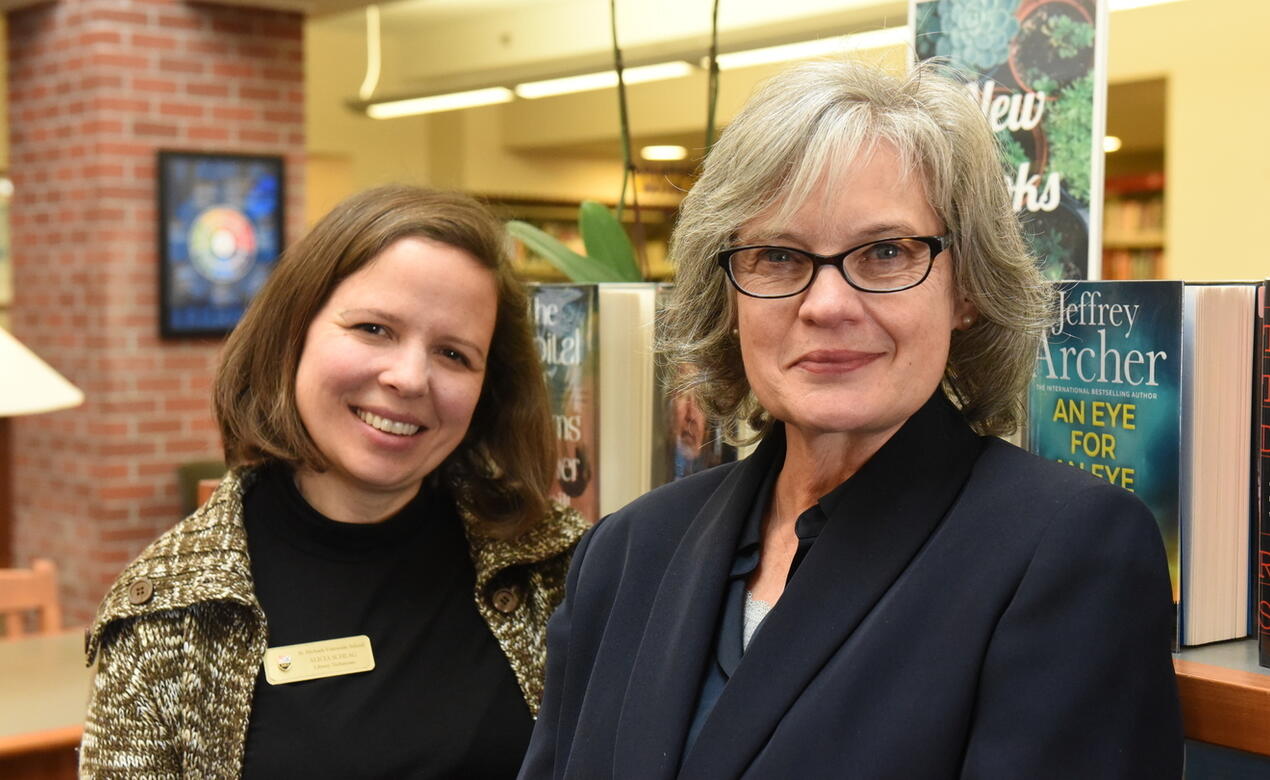
Helping guide that experience are Head of Library Studies and Research Kirsten Davel and Senior School Library Technician Alicia Schlag, who curate the Snowden Library's collection and displays with a simple goal in mind.
"We're always trying to help the right book find the right reader," said Schlag.
Displays That Spark Discovery
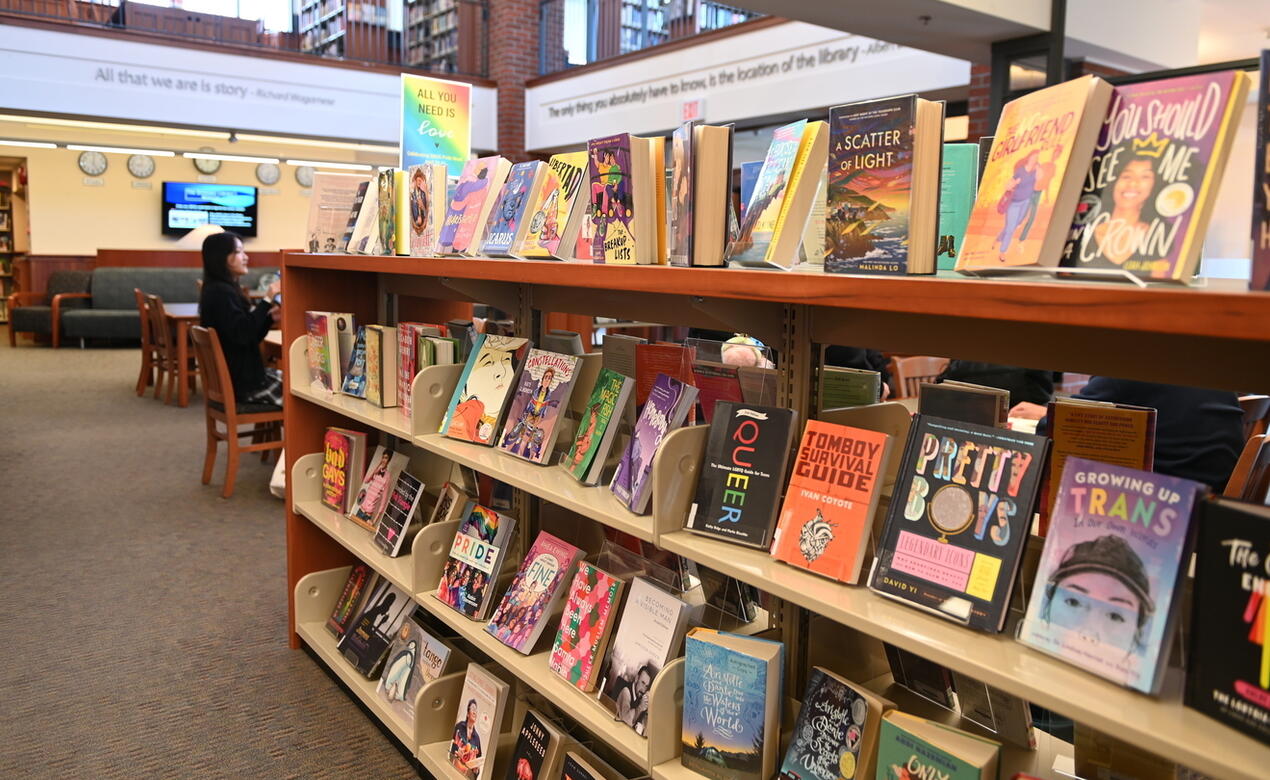
Throughout the year, the library's displays offer an ever-changing invitation to explore new ideas, genres, and perspectives. Seasonal themes such as Black History Month, Remembrance Day, and the National Day for Truth and Reconciliation often shape the selections, while other displays surface what Schlag calls the library's "unsung heroes": titles hidden among the stacks that deserve a wider audience.
"Like books themselves, display possibilities really are endless," Schlag said. "It's like trying a new food to expand your palate."
The displays work. Schlag notices books going out within days of a new theme going up, and the conversations they spark between students, between staff, between people who might never have reached for the same shelf, are part of the point.
To support readers beyond the library's walls, Schlag also produces an audiobook newsletter before each school holiday, curating narrated titles perfect for a family road trip, a commute, or an afternoon in the garden.
Reading Dangerously
Some displays do more than spark curiosity. They court a little controversy. Each February, in recognition of Canada's Freedom to Read movement, the Snowden Library puts its banned books front and centre.
The effect is immediate. When the display went up this year, a few students made a beeline for the shelf and walked away with armfuls. "A couple of students picked out five or six from the banned books display," Schlag noted, "and I've had great conversations with staff about these books."
Titles currently on display include Mark Twain's Adventures of Huckleberry Finn, Marjane Satrapi's Persepolis, and Suzanne Collins' The Hunger Games, books that have been challenged or banned at various times and that remain as relevant as ever.
It turns out that telling people they can't read something is a remarkably effective way to make them want to.
A Collection Built With Care
With more than 1,000 students, faculty, and staff regularly using the Snowden Library, Davel and Schlag are thoughtful about ensuring the collection reflects a wide range of voices, needs, and reading levels.
New titles are selected through a balance of professional recommendations from sources like the School Library Journal and bestseller lists, alongside direct input from students and teachers. The result is a collection that is both academically rigorous and genuinely inclusive.
"We choose diverse resources to ensure all students are represented in the collection," Davel explained. "At the same time, students develop the critical thinking skills needed to navigate complex or controversial ideas."
That commitment extends to the library's growing Indigenous collection, shaped in part through collaboration with community Elders. Métis Elder Jo Ina Young, for example, played an instrumental role in guiding the selection of fiction and non-fiction titles to ensure a wider range of authentic Indigenous voices and stories are represented on the shelves.
Film and television adaptations regularly bring certain titles back into the spotlight, too. "We added extra copies of Dune, It Ends With Us, The Summer I Turned Pretty, and The Ballad of Songbirds and Snakes when those came out," Schlag noted, "and more recently, the Stephen King novels It and The Long Walk, even though they were first published decades ago."
Certain series remain perennial favourites. "We're constantly replenishing our stock of Harry Potter books — still comfort food for many of us," Schlag said.
The Right Book for Every Reader
For Davel and Schlag, the most rewarding moments come when a reader finds a book that truly resonates, whatever that looks like for them.
"Whether they arrive with a specific title in mind or just a general interest, we encourage our patrons to borrow several books to find the one that truly resonates," Davel said. The library's approach is guided by what she describes as a "no-judgment" policy: "We believe there is a perfect book for every reader."
That philosophy shows up in the diversity of what circulates. A student recently shared how much he had enjoyed his first foray into the classics, finding in them not just a challenge but a window into Victorian society. A colleague who had experienced a long reading drought discovered historical non-fiction through a librarian recommendation and hasn't stopped since. And staff are reading too: last year, adult borrowers checked out 3,911 books from the library.
"It's important for our younger patrons to see themselves as part of a rich reading culture," Schlag said.
Schlag recently witnessed one of those moments of genuine connection when a student finished Lauren Roberts' Powerless series.
"She told me the companion book had made her cry so hard," Schlag recalled. "That's what we want — to find books that move us, whose characters we can empathize with, to learn what it means to be human."
Snowden Library: By the Numbers
17,000+ physical items in the collection ~60% nonfiction | ~35% fiction | ~5% periodicals
700+ new books added each year
6,000 ebooks and audiobooks available
3,911 books checked out by SMUS staff and faculty last year
1,000+ students, faculty, and staff with borrowing access


