

At 4560m above sea level on Mount Kailash, life moves slowly. There is little plant life; the land is barren and rocky, highlighted with frozen creeks and rivers that mirror the eternal sky. In the distance stand the greatest mountain peaks on Earth, the mighty Himalayas.
After driving for four days over the plains across Tibet to Mount Kailash, then trekking to the north face and back, Demian Monroy ’93 and I learned from some locals of a holy man planning to spend the winter in a cave near the shores of Lake Manasorovar. So, we decided to walk out to the lake area to meet him and bring him supplies.
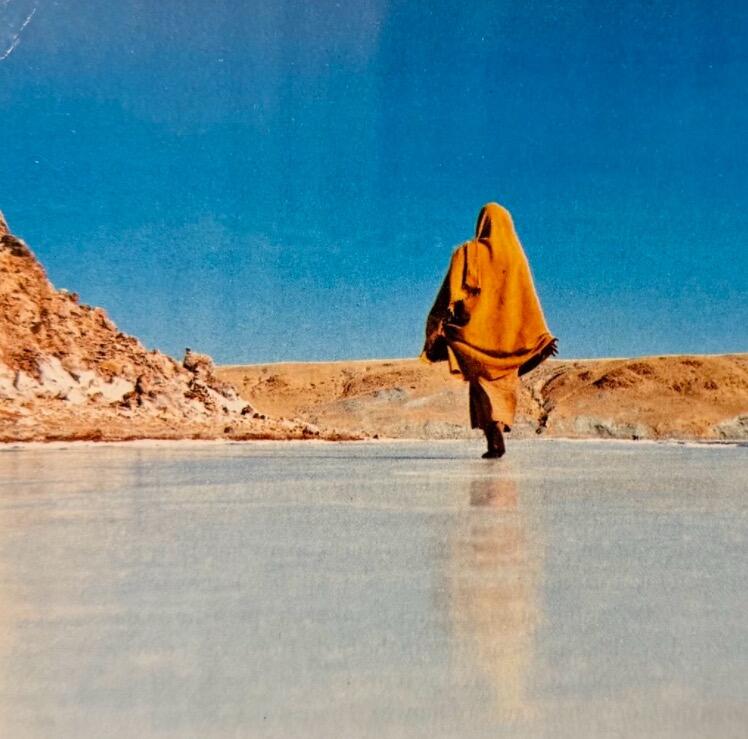
We set out on foot over the rocky outcrops for about an hour, between Chiu Gompa and the lake, where the November temperatures rarely reach above 0°C and can plummet to -20°C or colder at night. We followed the stone cairns the locals use to navigate when the snows come. As we crested the edge, a vast lake appeared. Standing there on the frozen ice below us stood a figure in a brown woollen cloak. To our astonishment, he was in bare feet.
“Hello!” we shouted.
He greeted us with a “Hello!” in return.
“What are you doing?” I asked in disbelief.
“Me looking ice. Ice always changing!”
The man came to the shore, and we presented him with some small items. He invited us to come to his cave for tea. We walked south on the west side of the frozen lake, beside the brown rock cliffs and towards the snow-capped Memo Nani (the thirty-fourth highest peak in the world). While he walked to a small hole where he kept the ice thin to collect water, we scrambled up the shale cliff wall to his “cave.” We watched him dip a large tin can with a stick into the water.
The cave itself was no more than a hole in the rock, just tall enough to sit in, just wide enough for two sets of shoulders, and just long enough to lay down. There was a small wall of rocks and moulded dirt built up to deflect wind and snow from entering the mouth of his winter home. He had moulded another large tin can into the dirt floor, which acted like a stove, in the space behind the wall and just outside the cave. He lit some twigs and boiled the water for tea.
The three of us were warmed by the chai and the depth of conversation. Demian asked what he would be doing all winter, and the swami shared his thoughts on meditation and seeing the outside inside, and the inside out. The inversion technique had led him to many insights over the years, and it remains in our thoughts to this day. I remember talking about places on earth that had all-day sun in the summertime, and the sadhu repeated that phrase multiple times, like a mantra, as he clutched his knees and rocked back and forth.
Twenty-eight years later, this story was the inspiration behind the album art for my band Door d’Or’s debut full-length album The Exquisite Dream.
Darin Steinkey, Mike Ison (Door d’Or’s former bass player) and I sent Chris Bateman ’94 a number of ideas, but the image that stood out most was a picture of the swami walking barefoot on Lake Manasorovar as seen in the book Sumeru Parvat: 12 years of Kailash Mansarover Pilgrimage and Transformation. We hadn’t come up with a title for the album yet, but given the imagery the band employs, it seemed like a good starting point.
“So many of the songs lead back to the band’s adventures and journeys, and this image seemed like a must to include,” said Bateman. “And I knew I wanted to incorporate the golden doors as his spiritual destination, so we began there.”
Bateman, who is also directing a video for “Shelter” with the band, started with sketches, produced a mock-up, and then Darin, Chris and I got together to hash out the rest over Sen Zushi and a giant computer screen.
“The best part was the collaboration. Sitting together and basically visually jamming,” Bateman said. “I might not be able to solo on a guitar as deftly as I’d like, but after decades teaching and using Photoshop, I can quickly and confidently change and iterate a digital image. It was fun to bring their suggestions to life ‘live,’ so to speak.”
Bateman feels the resulting design speaks more to “In the Radiance,” the band’s third single from The Exquisite Dream, through the golden colours, echoing shapes and the leading lines in the clouds. In fact, the title of the album came from the bridge of “In the Radiance,” so that fit nicely.
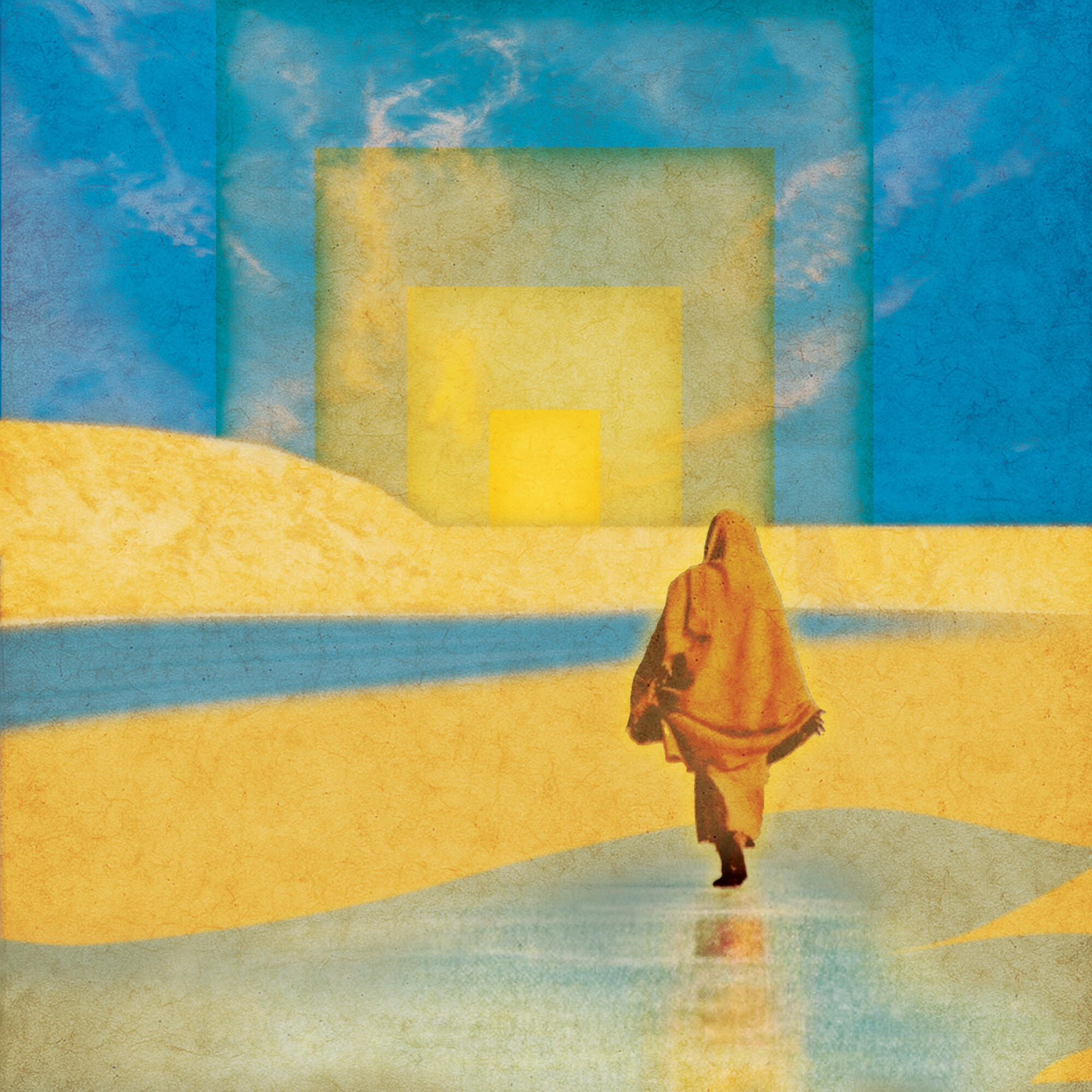
We have played music together with Chris for decades, so for him to bring the vision of The Exquisite Dream to life on the album cover was really special for us.
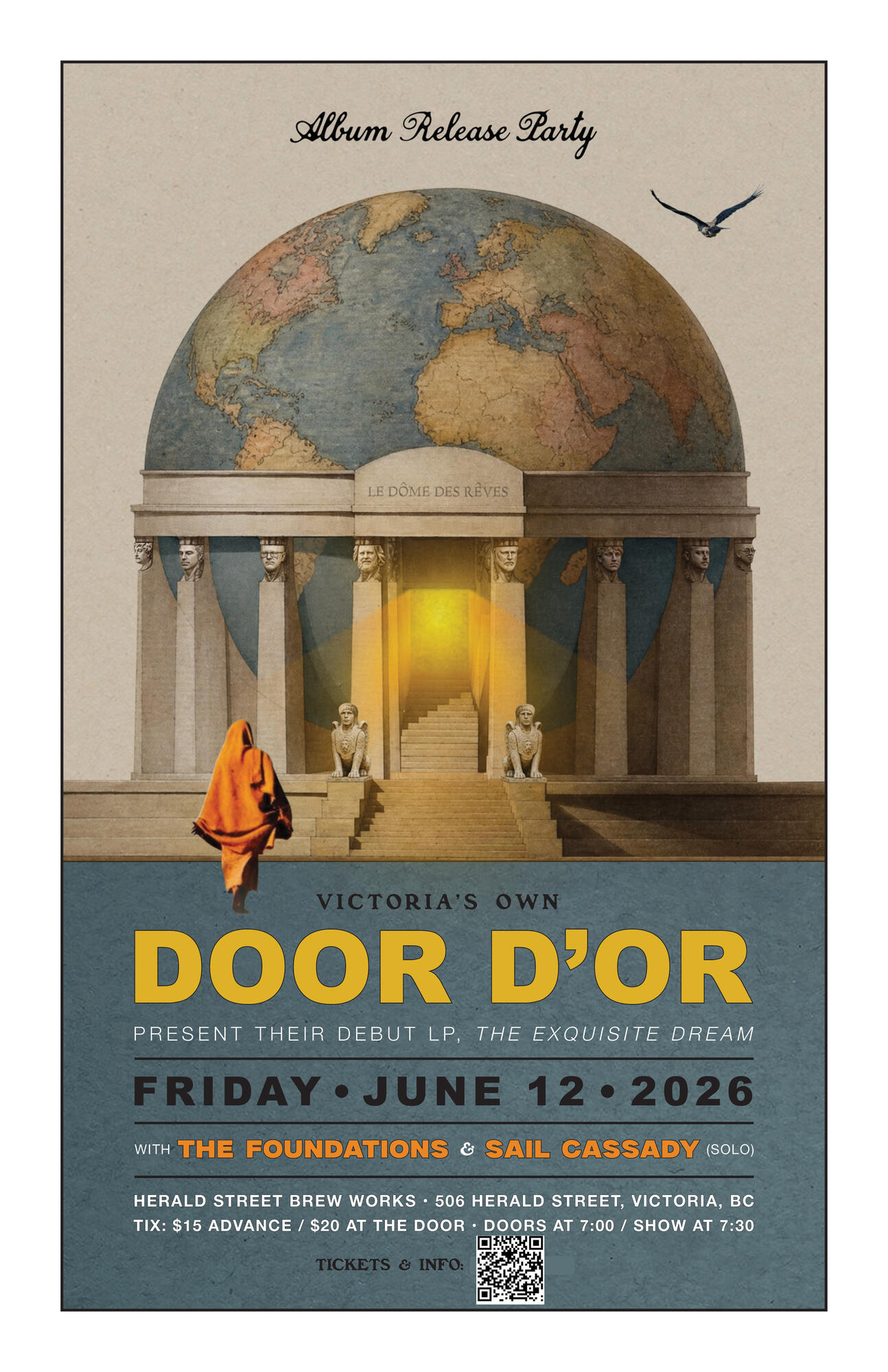
As part of our album release show tonight at Herald Street Brew Works, we commissioned local artist Alias Ink to craft an interpretation of the themes, tones and sound of The Exquisite Dream for the poster art. He produced a surreal piece that is a nod to the swami, the golden doors of perception, and the brilliant and mad French draughtsman Jean-Jacques Lequeu. You can read more about mad Jean-Jacques, his dome, and the story behind the album-release poster art at doordor.ca.
The album release will be a SMUS-tinged event, as The Foundations, comprised of Owen Sherman-Sandquist ’25, Julian Gale ’25, and Gage Hibbins ’24, will get the night rolling with a mix of covers and originals. Sail Cassady, the art pop project of long-time SMUS groundskeeper Colin Craveiro will then do a set before Door d’Or takes the stage to officially launch The Exquisite Dream.
We hope to see a strong SMUS contingent there!
Details
Friday, June 12, 2026
Herald Street Brew Works
506 Herald Street, Victoria
$15 advance (at doordor.ca)/$20 door
Doors: 7pm
Music: 7:30pm
Future shows:
July 11 Khatsalano Wonderland Festival, Vancouver, Vine Stage 11am