

In Engineering 9 at St. Michaels University School, starting over isn’t a setback. It’s the point. Over the course of the school year, Grade 9 students are challenged to design and build devices capable of playing the game of crokinole, a fast-paced tabletop game that demands precision and control. No design is ever meant to be final. Instead, students repeatedly return to the drawing board, rebuilding their ideas from scratch while carrying forward what they’ve learned and letting go of what didn’t work.
Through a combination of coding, 3D printing, everyday materials, and hands-on problem solving, students move through four milestones that unfold across the year. They begin working individually, then start over in pairs, and later rebuild again in groups of four. Each phase increases collaboration and complexity. With every restart, students combine ideas, rethink assumptions, and refine their designs, learning that progress often comes from revision rather than perfection.
The result is a wide range of creative approaches to the same challenge. Students design devices that can move across a crokinole board and reliably send a puck into play. From ramps and spring-powered launchers to pinball-style flickers, no two solutions look the same. That range of thinking is exactly what the course is designed to encourage.
Milestone Two
At the second milestone, students have started over in pairs, combining ideas from their individual builds and pushing their designs further through testing and iteration.
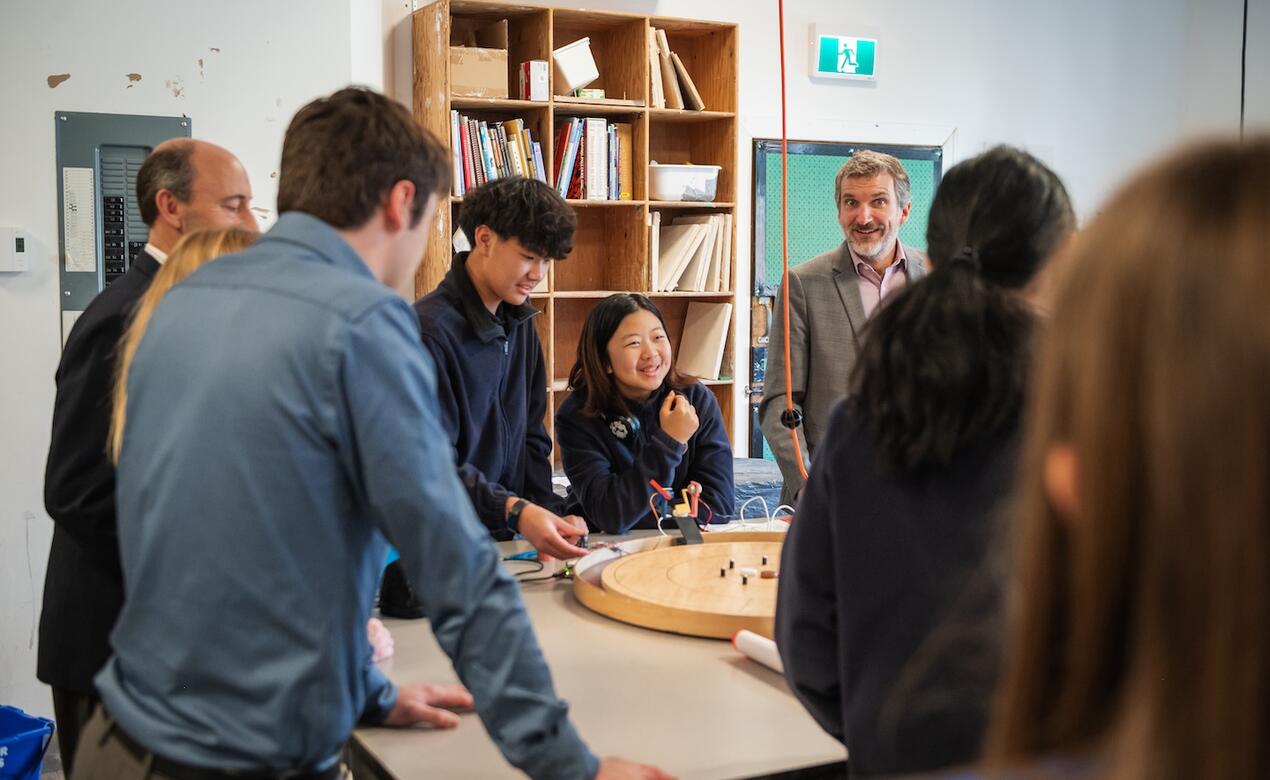
Derek Hu and Emma Li
Derek and Emma’s device uses a DC motor and ramp system designed for speed and ease of programming, though repeated testing has forced them back to the 3D printer as they work to balance reliability with performance.
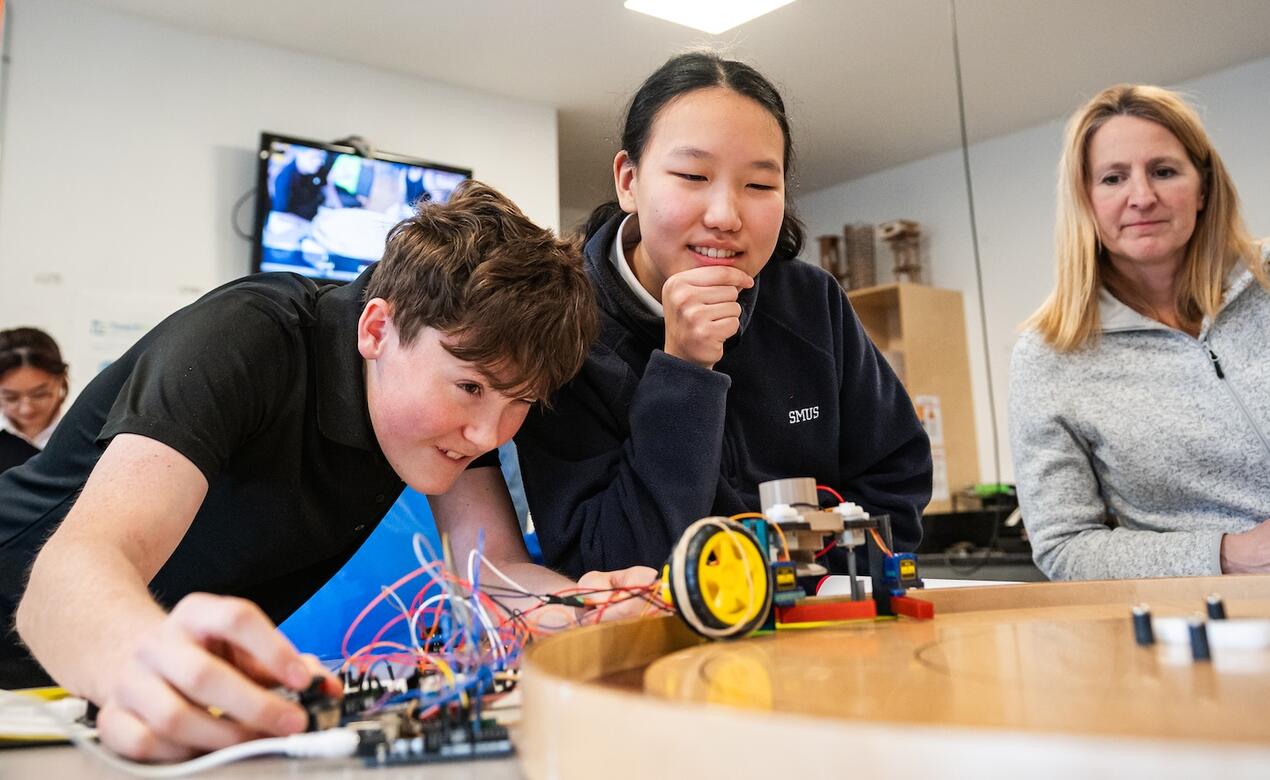
Kathryn Chen and Ilia Fraser
Building on an earlier flick-based design from Kathryn, together the pair expanded their device with adjustable gates, an auto-reloader, and a mechanism that guides the puck along the gutter to improve consistency.
“I think we had a lot of problems when we made this, so we had to double check a lot and not be afraid to ask for help,” said Kathryn.
“Iteration is just part of the engineering process,” added Ilia. “You have to be able to learn from mistakes and fix them.”
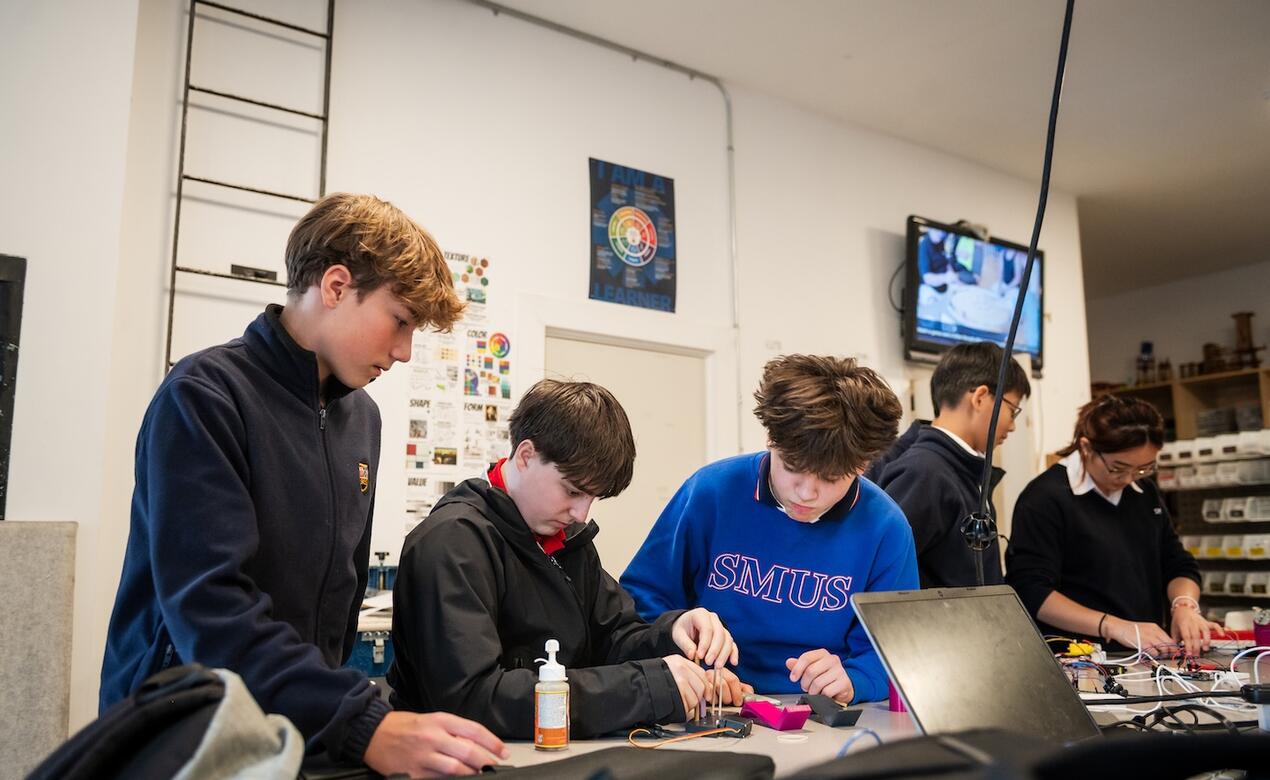
Des Farish, Graeme Shanks, and Yaron Chachamovich
Their team took a ramp-based approach, combining a joystick-controlled wheel system with a servo-powered hitter, refining each component individually as they work to dial in the ramp angle.
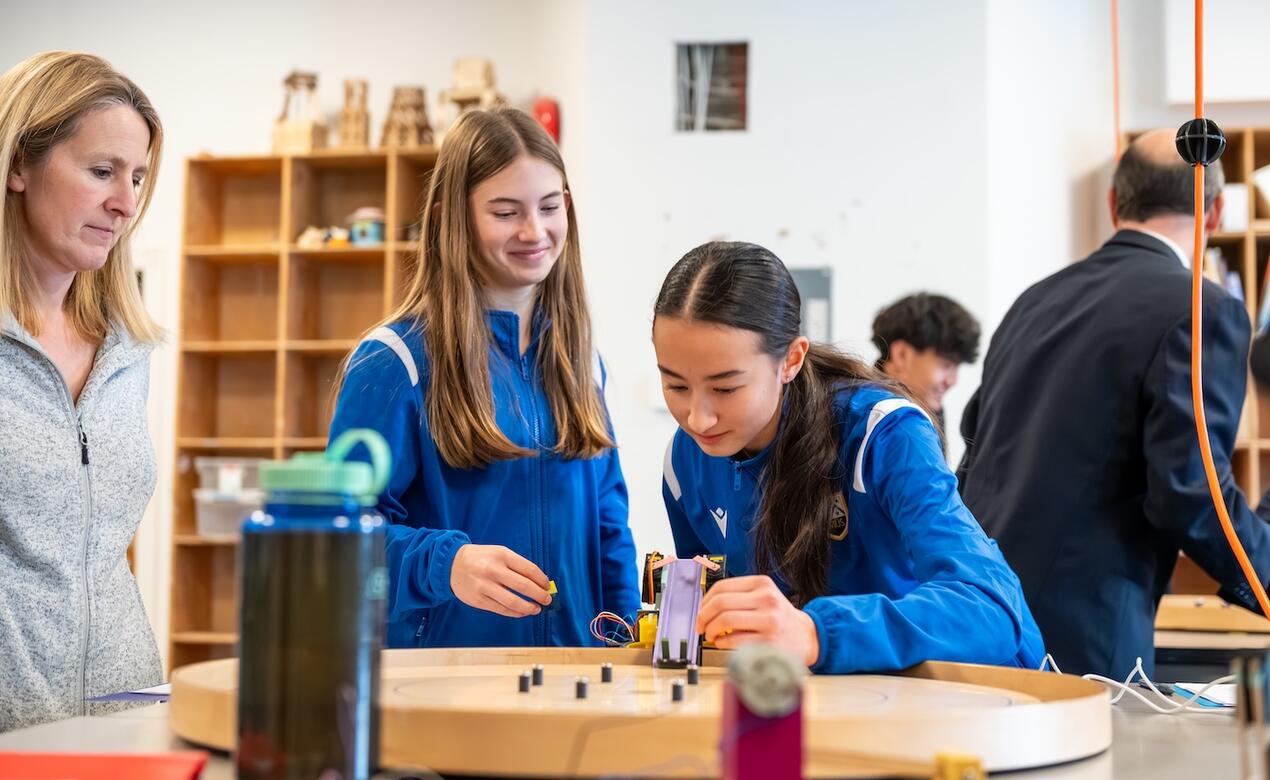
Ali Brooks and Piper Geddes
Ali and Piper experimented with a gravity-based ramp, using different weights to control force while integrating wheels and joystick controls to adjust angles around the board. Their group had the most consistent success on the second milestone trial day.
“Doing middle school engineering definitely helped,” said Ali. “We worked with the software, Fusion, last year so I felt comfortable to get right into it and then was able learn more about the coding and design process."
A Course That Evolves Alongside Its Students
As students move through each milestone, it becomes clear that the learning is not tied to any single device. Each rebuild asks them to let go of earlier ideas, keep what worked, and trust that improvement comes through revision. By the later milestones, students are no longer focused only on whether something functions, but on whether it works well and whether someone else could use it successfully.
“We have been doing this project in this course year over year,” said Engineering teacher Christopher Csaky. “Each year, students come up with their own ideas, but they also learn from designs created by past classes and visiting engineers. That’s why this year you’re seeing stronger machines than ever before. The bar keeps getting higher, and as teachers, we have to keep improving how we run the course too, from the materials we use to the way we challenge students.”
That same spirit of iteration shapes the final milestone, when the devices are handed over to Grade 8 students who must learn to use them without help from the designers. With only a working device and clear instructions, the machines must perform as intended. It is a fitting conclusion to a course built on starting over, where success is measured not by a finished product, but by how far students have come through the process of rebuilding, refining, and learning.