
For Grade 10 students in St. Michaels University School’s Experiential Education Program, Social Studies might mean travelling to Meares Island to learn about Indigenous governance. Science might mean studying marine biology on the coast or exploring plate tectonics in the field. English and Art might involve writing, sketching or creating environmental art in response to the places students visit.
This year marks the 20th anniversary of a program that has given generations of SMUS students a different way to experience Grade 10. The program was created in 2007 with the visionary minds of Becky Anderson, Pete McLeod and Kevin Cook, in collaboration with the then Leadership Program and Keven Fletcher and Keith Driscoll. It was built on the idea that academic learning could extend beyond the traditional classroom without sacrificing rigour.
“The Experiential Education Program has a rich history at SMUS, and this year marks a major milestone as we celebrate its 20th anniversary,” said Reagan Daly, Head of Experiential Education, Service and Global Expeditions. “Having been involved since its inception, I can truly say it is a special program, one that many graduates describe as a highlight of their time at SMUS. The best way that I can describe this program is that for those terms we are really a ‘school within a school.’”
A School Within a School
About 18 Grade 10 students take part each year, spending three of the six terms in the Experiential Program. They complete courses including English First Peoples (EFP) 10, Art 10 and Social Studies 10, with the curriculum taught through the program rather than in a traditional classroom. That doesn't happen without experts helping craft and evolve the program year over year. Ryan Dewar, Head of English, Kristy Martens, Head of Technology, Design and Engineering, and art teacher Krista Jones have each been instrumental in the current program's design and execution.
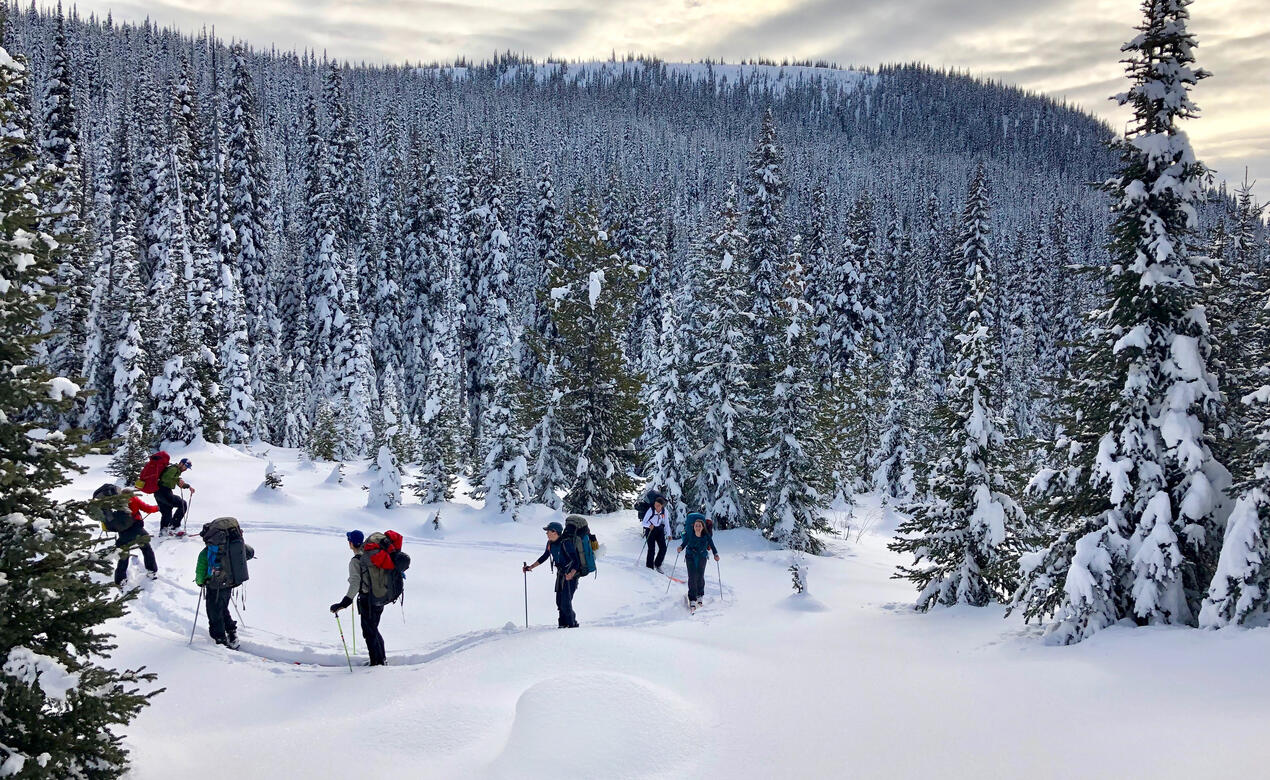
It is easy to mistake this program for Outdoor Education. While outdoor skills and trips are part of it, the purpose is academic. Teachers connect those experiences directly to the curriculum, with students spending time off campus during the academic day each week and taking part in a multi-day expedition during the term.
Students in the two current streams, Ridgelines & Coastlines and STEAM (Science, Technology, Engineering, Arts and Mathematics), are not stepping out of their academic program for these experiences. The experiences are the academic program.
When the curriculum comes to life
The program's first expedition of the year provides a good example.
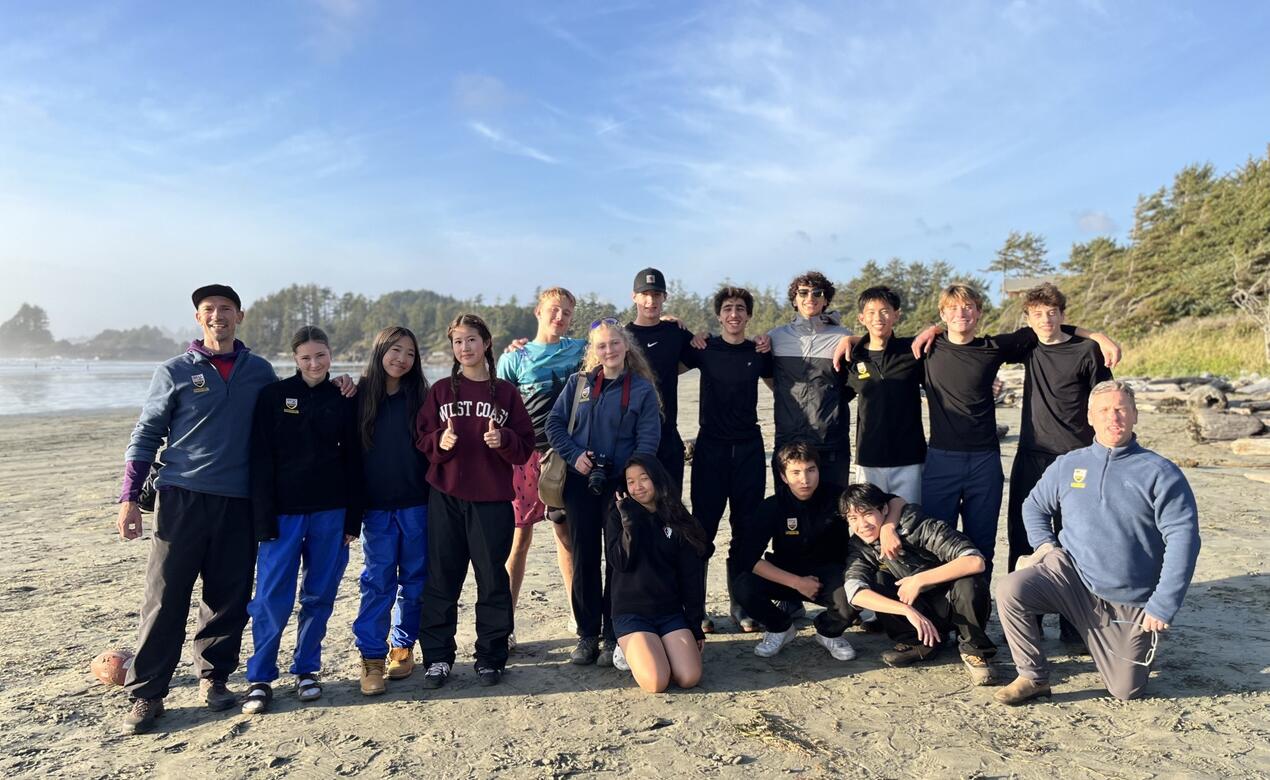
In Tofino and Clayoquot Sound, students in Ridgelines & Coastlines hike, kayak, surf and camp while studying Indigenous governance and self-determination, sustainability, resource management and land use. They learn about the history of Clayoquot Sound and connect with Tla-o-qui-aht Elder and carver Joe Martin on Meares Island.
Those experiences also feed directly into English and Art through writing, journaling and environmental art.
For STEAM students, the same coastal environment becomes a setting for Science 10, including marine biology, astronomy, plate tectonics and botany, alongside engineering challenges focused on earthquake preparedness and tsunami warning systems.
The students aren't simply studying a place and then visiting it. The place is part of the lesson.
A Social Studies class can investigate land use and Indigenous governance in a place where those questions are being actively lived. Science concepts can be observed in the environment around students. Engineering problems become something students have to work through rather than simply read about.
Twenty years of evolution
The program has changed considerably since it began in 2007. New streams and areas of focus have emerged, including STEAM and Indigenous-focused learning, as teachers have responded to student interests and new opportunities.
The experiences have changed, too. Students have travelled through Vancouver Island's backcountry and, two years ago, attended the Invictus Games in Whistler. The program has never been defined by a particular destination or set of activities.
What has remained is the opportunity to connect academic learning with experiences that could not simply be recreated in a classroom.
Ask graduates what they remember about Experiential, and the answer isn't always the destination.
“Many graduates describe their time in the program as a highlight of their SMUS experience,” Daly added. “When asked what made it so impactful, the most common response is the strong connections they formed with other students and teachers.”
Students spend extended time together, work through unfamiliar situations, solve problems and share responsibility. They are also repeatedly asked to use what they know.
A Social Studies question can be investigated in the place where it happened. A science concept can be observed. An engineering problem can be worked through. Writing can become a way of making sense of an experience a student has actually lived.
Twenty years after it began, the program continues to offer Grade 10 students something unusual: a chance to experience their academic learning in the places, situations and relationships that bring it to life.
The first expedition of the year is set for Oct. 26-29, 2026 in Tofino and Clayoquot Sound.
The current faculty leads include Kristy Martens (STEAM lead), Ryan Dewar (English First Peoples teacher), Krista Jones (Art teacher) and Daly who runs the Ridgelines & Coastlines stream.