

St. Michaels University School student Jared Qin '28 has been named one of just 10 winners worldwide of the 2026 Leaders of Today Award, selected from more than 3,400 applicants across 40 countries and announced on United Nations International Youth Day, August 12.
The recognition comes for Jared's use of artificial intelligence (AI) to identify evidence of galaxy collisions that traditional detection methods can miss.
The project builds on the galaxy merger research Jared brought to the Vancouver Island Regional Science Fair in April, where he finished second overall, before winning bronze at the Canada-Wide Science Fair at the end of May.
Mergers are one of the main ways galaxies grow and feed their black holes, but the evidence does not stay obvious for long. Once a collision settles down, the resulting galaxy can look ordinary enough that sky surveys count it as ordinary too. Jared trains his model inside simulated universes where every collision is already labelled, then sets it loose on real telescope images to find the ones that have been filed away as unremarkable. The lopsidedness measure he developed, a way of reading the shape a galaxy keeps long after a collision has calmed, is the part of the method he calls his own. He documents it on an open-source project board.
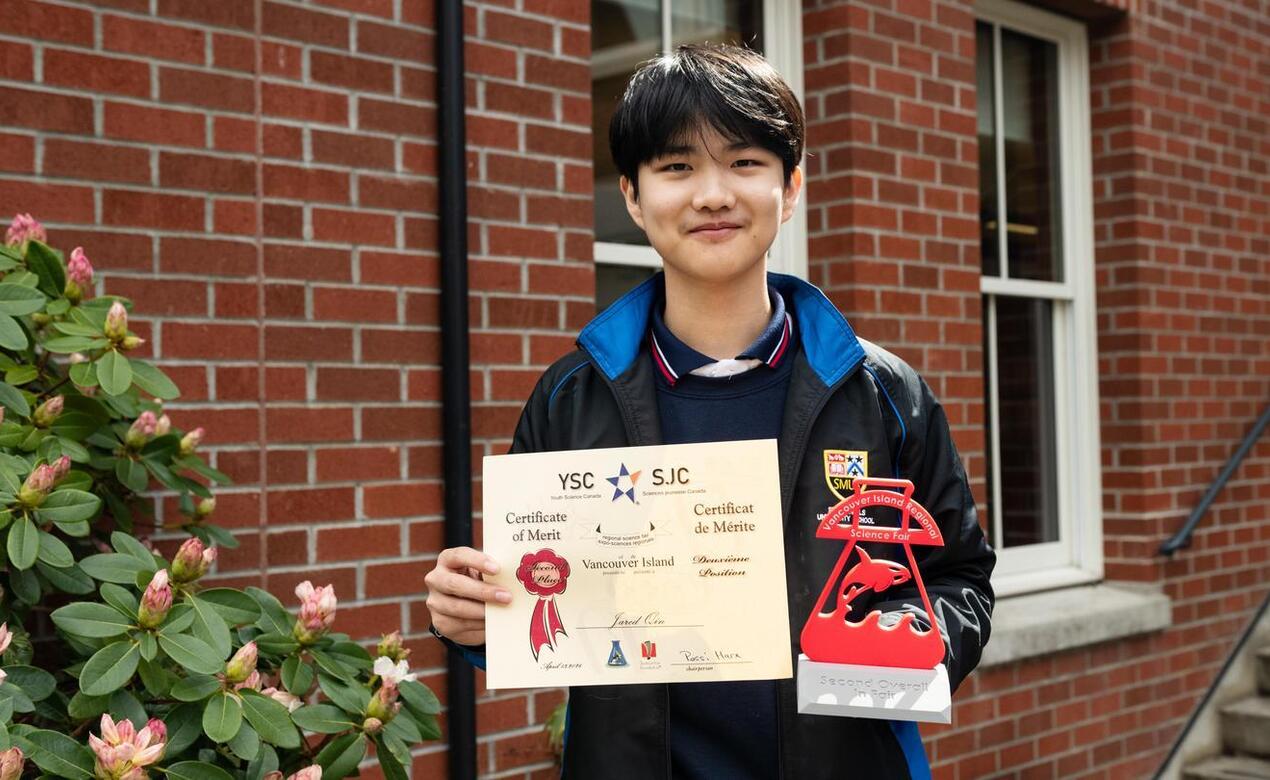
Leaders of Today, the Toronto-based platform behind the award, works with more than 38,000 young people across 165 countries. This year's ten winners were chosen across seven countries, judged on potential rather than polish. Ziyaan Virji, the organization's co-founder, said the award was built with students like Jared in mind.
"Most awards go to young people who already have everything," Virji said. "We built this one for the 99 percent who do not usually win awards, and Jared is exactly why."
That work has taken on new urgency now that the Rubin Observatory in Chile has switched on, producing hundreds of thousands of detections a night, more than every previous sky survey combined, with almost none of it reviewed by a person. The $1,000 that comes with the award will go toward GPU time, letting Jared run a full-sized version of his model against Rubin's data instead of the scaled-down versions he has relied on so far.
For Jared, the appeal of the award has less to do with recognition and more to do with what it makes possible.
"A kid with no lab and no money can still find something real the big surveys walked right past," he said. "GPU time is the gap between the toy version and the real one."
Read more about Jared Qin:
UNICEF Youth Advocate Program Gives Jared Qin '28 a Global Platform


