
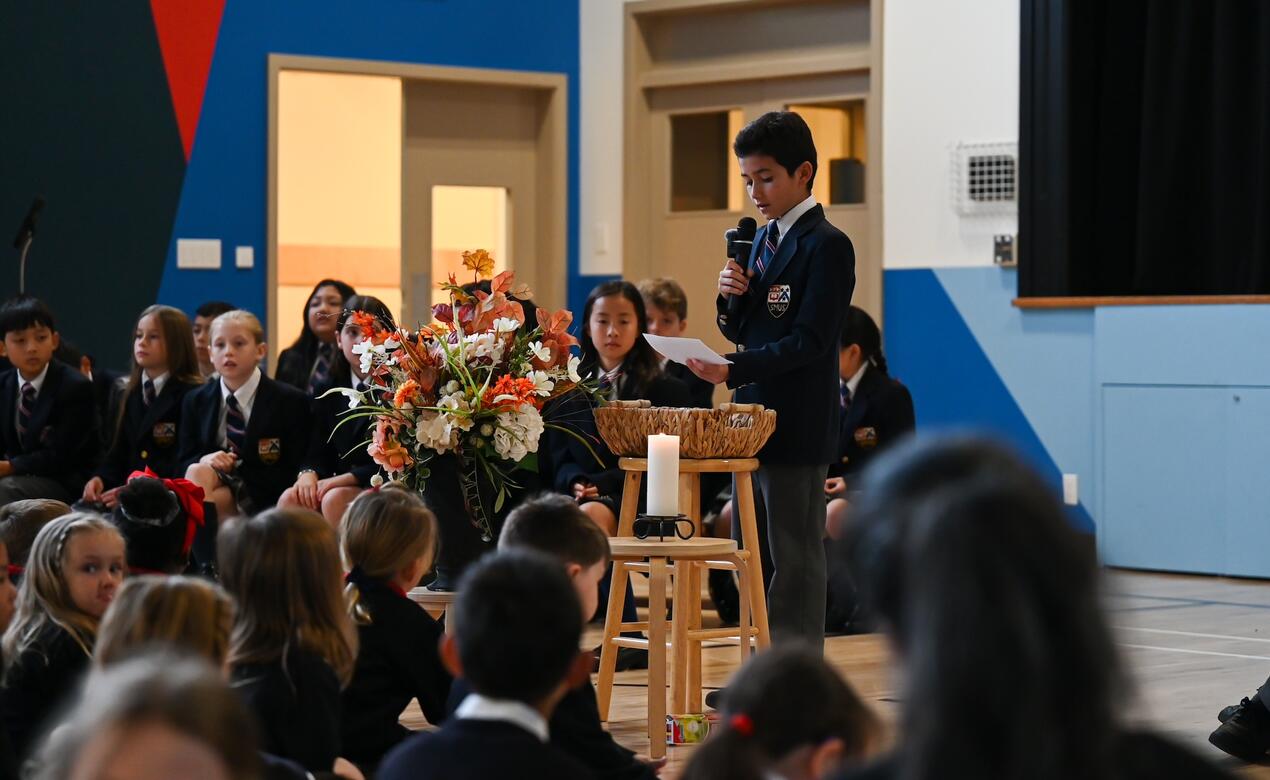
On Oct. 5, all 44 St. Michaels University School Grade 5 students took to the microphone in front of the Junior School community to share their ideas about leadership.
For the oldest students in the Junior School, it is a significant moment. Each student delivered a speech they had spent the previous few weeks developing, sharing their ideas with peers, teachers, parents, grandparents and supporters gathered in the gym.
But the assembly is really the culmination of a longer process: giving students the time and space to figure out what leadership means to them.
Starting with a Blank Page
Grade 5 students began working on their speeches on the third day of school with their core teachers, Brandon Hawes and Matt Keil.
“We started with the big question of what leadership means,” said Keil. “The students brainstormed together, first as a class and then in smaller groups. They considered words and ideas associated with leadership and talked about people they admired. From there, they began narrowing in on the ideas that resonated with them personally.”
Over the next two weeks, students wrote, revised and refined their speeches before practising how to deliver them — from approaching the microphone to speaking confidently to a room full of people.
The result was 44 different perspectives on what it means to lead.
Leadership Can Look Different
For some students, leadership showed up in small, everyday acts; for others, it meant speaking up, persevering through challenges, inspiring others or making change.
“Some ways you can show leadership is including people if they get left out or have nobody to play with,” said Ella.
August described leadership in similarly everyday terms like being kind, picking up trash on the playground or helping a younger student read a book. Aidan put it simply: “Anyone can show leadership, you just have to try.”
Their role models reflected that same range. Some looked to people who challenged injustice, including Martin Luther King Jr., Viola Desmond, Malala Yousafzai and Greta Thunberg. Others found leadership in perseverance, athletic achievement or artistic accomplishment, pointing to people such as Terry Fox, Connor McDavid and Ludwig van Beethoven. For many, their strongest examples were closer to home like a parent, grandparent, teacher or coach.
“A leader to me is kind and cares for others,” said Sawyer. “They should also be patient, resilient and inspiring. If someone messes up, a leader understands they are learning.”
Leadership Can Look Different
For some students, leadership showed up in small, everyday acts; for others, it meant speaking up, persevering through challenges, inspiring others or making change.
“Some ways you can show leadership is including people if they get left out or have nobody to play with,” said Ella.
August described leadership in similarly everyday terms like being kind, picking up trash on the playground or helping a younger student read a book. Aidan put it simply: “Anyone can show leadership, you just have to try.”
Their role models reflected that same range. Some looked to people who challenged injustice, including Martin Luther King Jr., Viola Desmond, Malala Yousafzai and Greta Thunberg. Others found leadership in perseverance, athletic achievement or artistic accomplishment, pointing to people such as Terry Fox, Connor McDavid and Ludwig van Beethoven. For many, their strongest examples were closer to home like a parent, grandparent, teacher or coach.
“A leader to me is kind and cares for others,” said Sawyer. “They should also be patient, resilient and inspiring. If someone messes up, a leader understands they are learning.”
Stepping Into Leadership
Leadership is woven into Grade 5 life at the Junior School. As the oldest students, they become big buddies to younger students, welcome prospective families and visitors and take on a visible role in the school community. They are also the first grade to wear a blazer as part of Number 1 uniform.
The leadership speeches give students another opportunity to step into that role — not by telling them what a leader should be, but by asking them to decide for themselves.
Soon, they will leave the Junior School and become the youngest students in the Middle School. They will be starting over in a new environment, but they will bring with them something they have already begun to practise: finding their voice, thinking about how they can contribute and recognizing that there is more than one way to lead.