
Some learning is easier to understand when you can put your hands on it.
On October 6, Grade 6 students spent the day at O.U.R. EcoVillage in the Cowichan Valley, mixing clay, picking apples, feeding sheep and exploring what it means to live more lightly on the land.
O.U.R. EcoVillage, or One United Resource, is a sustainable living demonstration site and learning centre where students can see sustainability in practice. SMUS has had a long-standing relationship with EcoVillage, with students returning year after year to contribute to projects and learn from the people, land and systems around them.
The Grade 6 students were one of three Middle School groups at EcoVillage this week. Each grade has its own Outtrip day and the same three choices: hiking, paddle boarding or EcoVillage. This gives students opportunities throughout their Middle School years to experience different ways of learning outdoors.
More Than a Field Trip
At EcoVillage, sustainability is not something students simply hear about. They work with it.
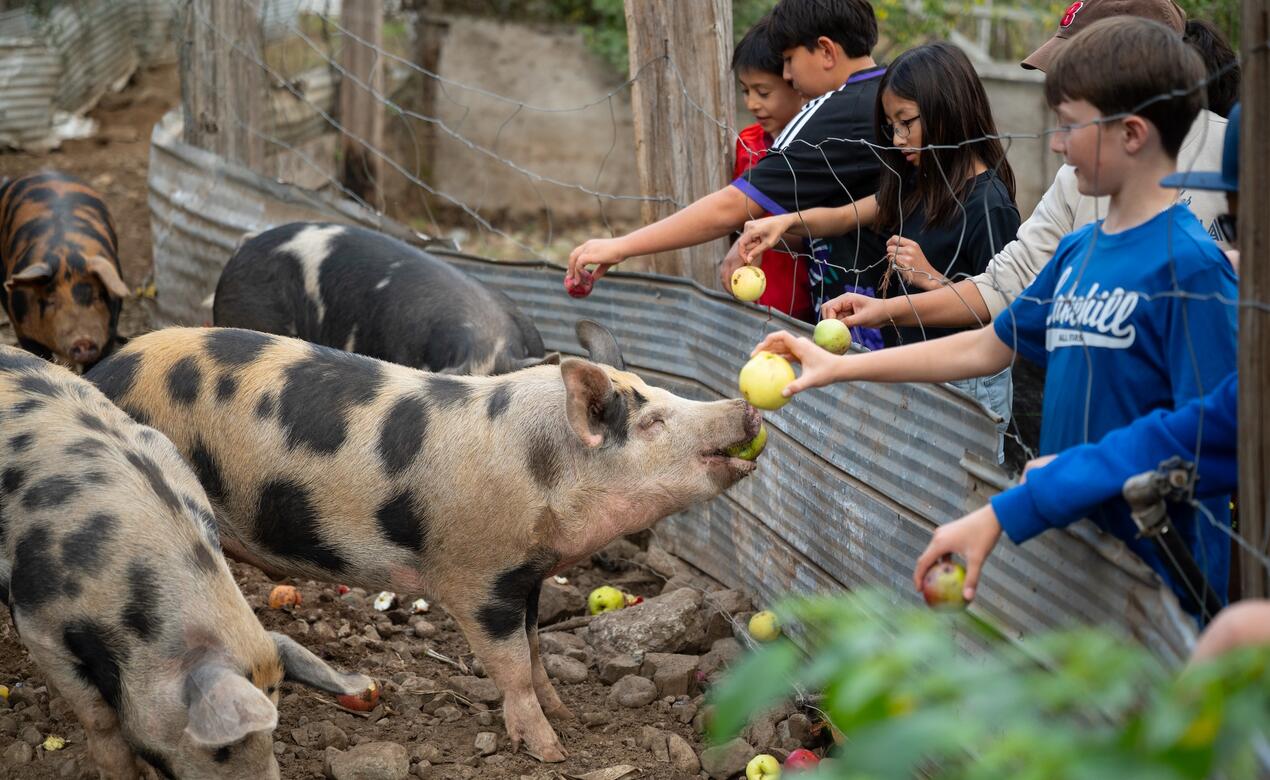
Students explored the EcoVillage house and learned how its walls are designed around the sun's patterns throughout the seasons. They fed animals, harvested apples and learned how a single crop can be used in multiple ways, from food to cleaning products.
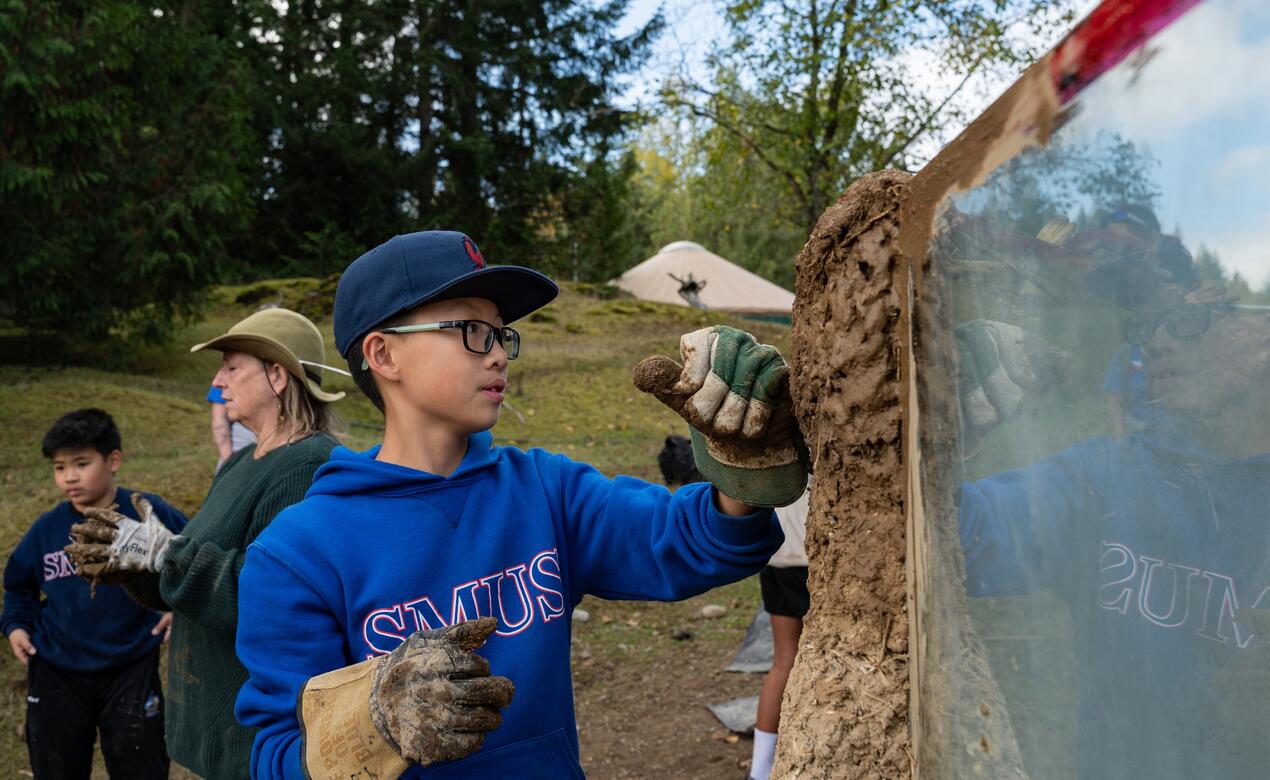
They also returned to a project familiar to generations of SMUS students: the EcoVillage cob dragon wall.
Working in pairs, students mixed clay, sand, gravel, straw and water before adding their own material to the wall.
“So we're making a clay mixture called cob to finish the dragon,” explained Grade 6 student Gary. “I've made clay at school but not in such a big amount. It's really cool.”
Students were not just learning that clay can be used as a building material. They were mixing it themselves and adding to a wall that SMUS students have worked on for years.
Seeing How Things Connect
The day also introduced students to permaculture, which looks at how natural systems can work together and how resources can be used thoughtfully.
While picking apples, students learned how to recognize ripe fruit, use apple pickers and make use of apples that might otherwise go to waste. Some became apple crisp, others were prepared for dehydrating, and cores and peels can be fermented into vinegar.
For Finn, the biggest takeaway was simple.
“How to make cob. I didn't know you could do that!”
Biel described the experience as learning “survival skills,” including knowing how to build a wall and make things with apples.
The learning goes beyond those practical skills. Students begin to see the relationships between what they eat, what they build with, what they throw away and how those materials can be used again.
They also experience the value of working together. Mixing cob takes cooperation. Harvesting and preparing food takes a group effort. At lunch, students gathered in a gratitude circle and shared what they were thankful for, including family and friends, fresh apples, chickens, dogs and simply the opportunity to be together.
There was also a connection to another SMUS group. Just one week earlier, Grade 10 students had been at EcoVillage, and the Grade 6 students enjoyed apple crisp made from their harvest.
Learning That Sticks
That is the value of experiences like EcoVillage. Students can learn about sustainability in a classroom, but working with clay, harvesting an apple or feeding an animal gives those ideas a physical reality.
The experience reflects SMUS's broader approach to outdoor education, creating opportunities for students to explore, experiment, work together and understand the world by being part of it.
Sometimes the learning is practical. Sometimes it is unexpected. And sometimes it is as simple as realizing, “I didn't know you could do that.”