

Economics 12 students took their learning outside the classroom this fall as they partnered with three local businesses to explore real-world marketing challenges. Students applied economic theory to genuine business questions and presented their recommendations directly to the owners of Paulz Farm, Indigenous Roots Coffee Company and Fizz Bottle Co.
Three classes took on the challenge of how to expand customer reach for one of the three local businesses. Teacher guidance from Graham Lilly and David Heffernan ‘06 gave the students the opportunity to visit each business, ask questions, research, meet with marketing experts, and refine their ideas before pitching their final suggestions.
“This project gives students the chance to analyse a real business,” said Lilly, who each year finds new businesses for the Economics students to work with. “It helps them develop meaningful research, group dynamics and presentation skills, and they rise to the challenge when they know their ideas matter.”
Indigenous Roots Coffee Company
For Indigenous Roots Coffee Company, students visited Level Ground Trading, where the company’s beans are roasted, and met co-founder Natasha Parrish. She spoke about the mission behind Indigenous Roots Coffee Company and challenged students to explore meaningful ways to grow its market and impact. This led groups to consider strategies such as expanding social media engagement, partnering with cafés or community groups, developing new merchandise and participating in local craft fairs and events. Their recommendations focused on strengthening brand visibility and deepening community connections.
Paulz Farm
For Paulz Farm, a Saanich farmstand run by Paul and Chelsea Davidson, students’ ideas ranged from practical to innovative. One group created a functional mockup of a website, complete with a recipe section featuring Chelsea’s carrot cake, which left Chelsea visibly moved as she imagined how a stronger online presence could support the business. Others proposed educational visits for school groups and explored the feasibility of offering fresh juice made from the farm’s produce, even hosting a small tasting on campus to test the concept. Chelsea was struck by their initiative and their ability to turn a passing comment during the field trip into a tested prototype.
Fizz Bottle Co.
Students partnering with Fizz Bottle Co. focused on how to engage customers in a growing non-alcoholic beverage market. Suggestions ranged from pricing and store layout adjustments to partnerships with restaurants, themed tasting events, a seasonal subscription box and small-scale marketing campaigns and workshops around the city. Owner Jeff Wright praised the students’ thoughtful ideas and the attention to detail in their mockups, calling several ideas “bang on”.
“Working with Jeff showed students that economics isn’t abstract; it is the language businesses operate in every day,” said Heffernan. “Presenting their insights to a real entrepreneur demonstrated how classroom theory becomes real-world practice.”
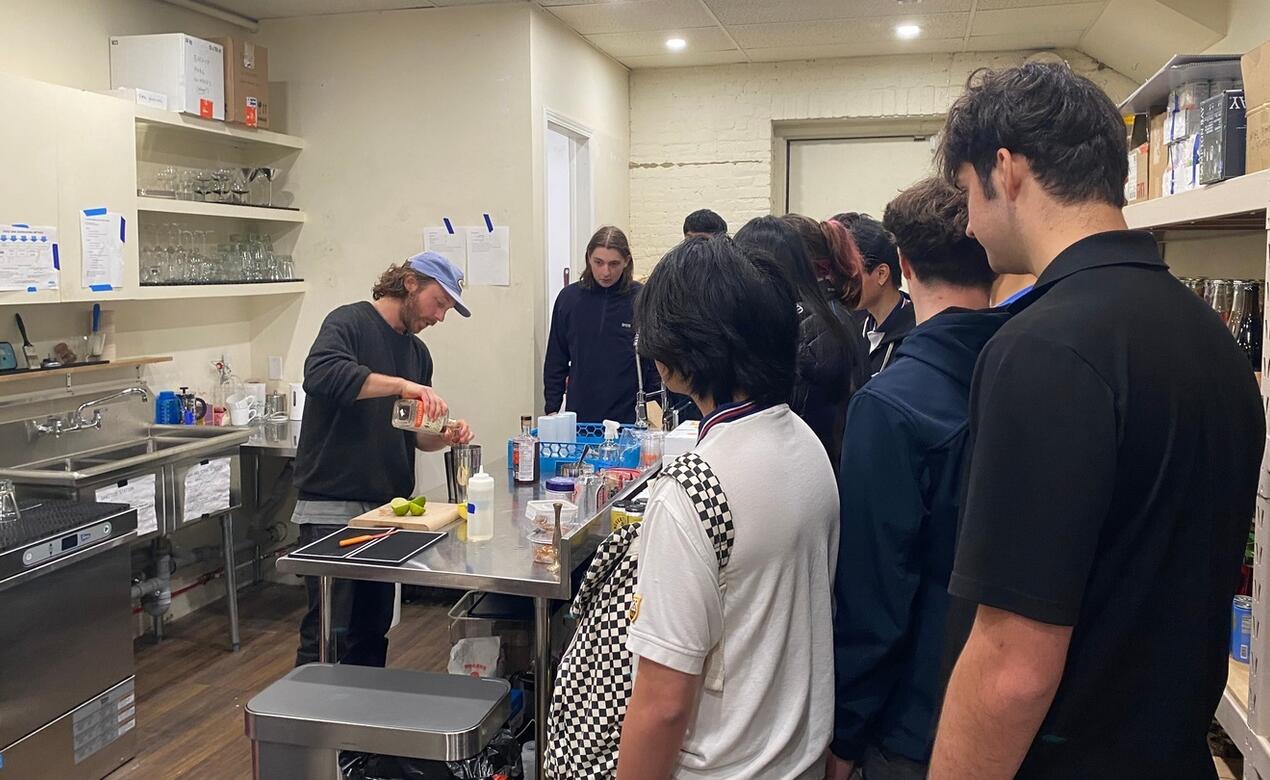
Connecting Classroom Theory to Real World Practice
Across all three partnerships, students experienced firsthand how economic principles guide business decisions. They learned to ask purposeful questions, think like consultants and communicate their ideas with clarity and confidence. For the local businesses involved, the students’ work offered fresh perspectives — and in some cases, inspiring new directions to explore. The businesses expressed their gratitude in various ways after the presentations, from handwritten notes to social media messages acknowledging the students’ thoughtful ideas and the value of the partnership.
This project has been a longstanding part of Economics 12, with past classes partnering with businesses such as Parachute Ice Cream, Level Ground Trading, FED Urban Farm, Connie’s Cookie Jar and The Local General Store. Each collaboration offers students a new lens into how entrepreneurs think and operate, reinforcing the connection between classroom theory and the realities of running a business.


