What happens to someone’s story after its final chapter has been written? What reminds us of home when we are thousands of kilometres away?
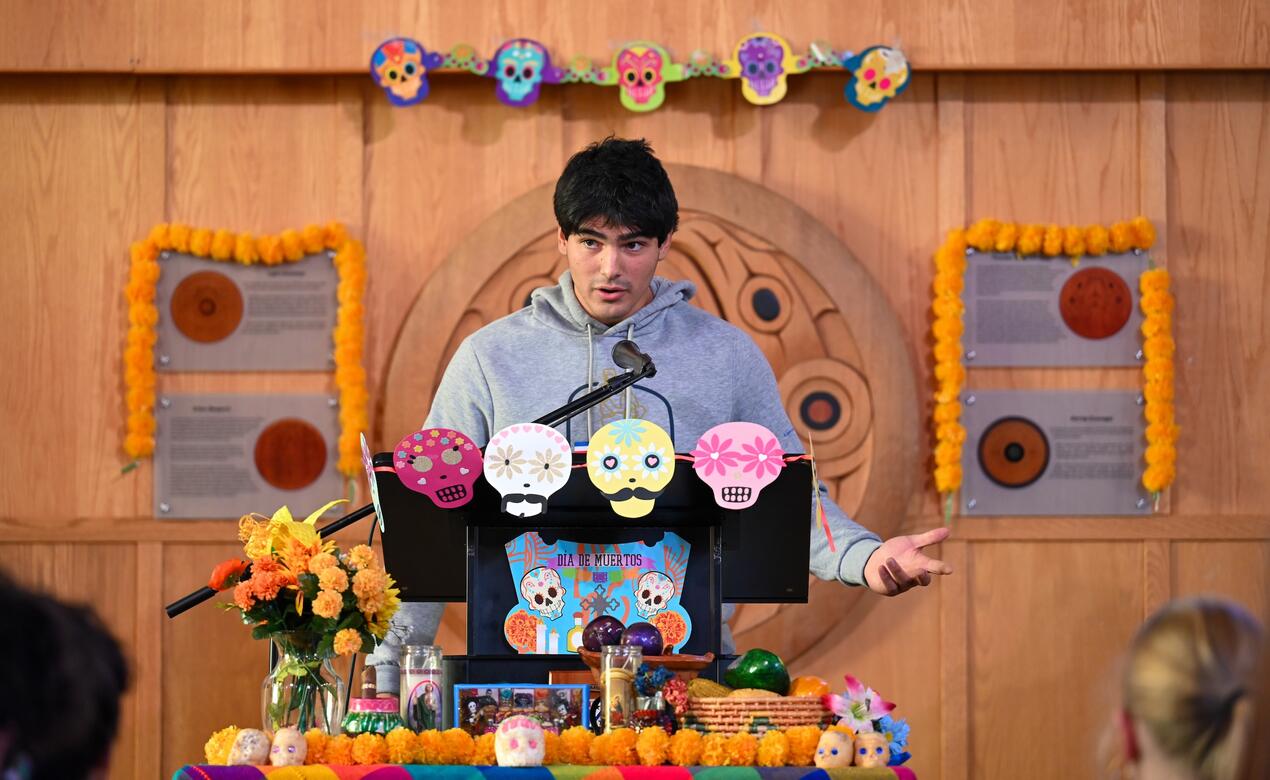
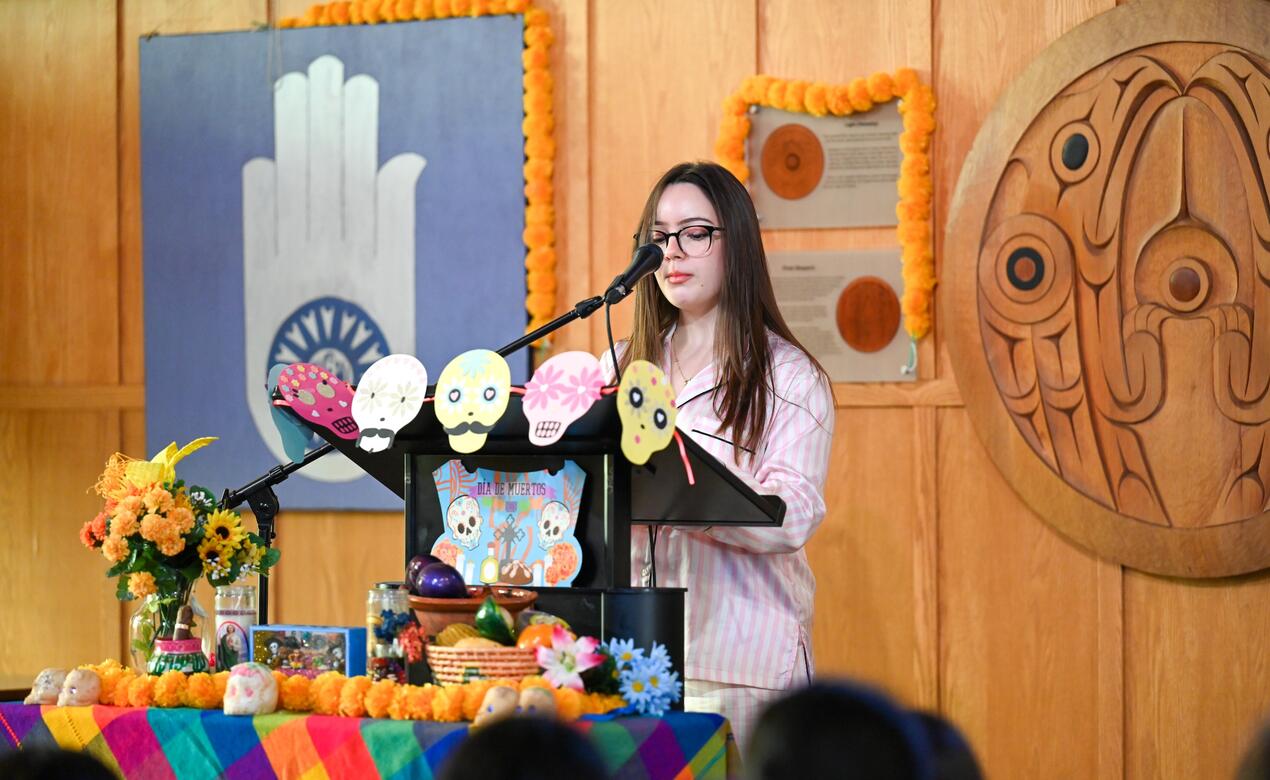
These were questions Grade 12 students Santiago Flores La Salvia and Isabella Hammeken Lorandi brought to their peers during a recent Chapel at St. Michaels University School. Speaking ahead of Día de Muertos, or the Day of the Dead, the two students from the Spanish Language and Culture Club shared a tradition with messages about remembrance, identity and belonging.
Their reflections also offered a glimpse of what Chapel means at SMUS today.
While the name reflects a longstanding religious tradition, Chapel has evolved into a time for the school community to come together across religions, cultures and beliefs. Often designed and led by students, these gatherings make space for musical performances, personal reflections and cultural learning. Students can find the courage to speak before their peers for the first time, share something important to them and hear perspectives that broaden their own.
For Santiago and Isabella, that meant introducing a celebration rooted in Mexican culture while inviting everyone listening to find a connection to their own lives. Día de Muertos is celebrated on Nov. 1-2 by Mexican communities around the world.
Remembering Is Another Way of Showing Love
Santiago spoke about Día de Muertos as a celebration of life, love and remembrance. He described families welcoming the memory of loved ones through ofrendas: altars decorated with photographs, candles, orange marigolds and favourite foods.
“These altars aren’t meant to worship the dead,” he explained. “They’re a way of welcoming loved ones home and reminding them that they haven’t been forgotten.”
Beyond the colours, food and traditions, Santiago asked his peers to consider how people continue to influence our lives after they are gone.
“When you cook your grandmother’s favorite recipe, share a funny memory of someone you’ve lost, or follow advice they once gave you, you’re keeping a part of them alive,” he said.
That invitation extended to everyone in the room, whatever their background or beliefs. Sharing a story, remembering someone’s laughter or acting on something they taught us can all be ways of carrying their influence forward.
“The beautiful message behind Día de Muertos is simple: remembering is another way of showing love.”
Bringing a Little Piece of Home
For Isabella, the celebration was also a way to explore the connection between culture and belonging.
“What is one thing that immediately reminds you of home?” she asked. “Maybe it’s the smell of your favourite food, a song your family always plays, or a tradition you’ve celebrated since you were little.”
At a school where students come from many countries and backgrounds, the question offered a familiar starting point. Isabella reflected on how moving away can change our appreciation of the everyday experiences we once took for granted: a family dinner, a familiar song or a celebration that brings people together.
“When we celebrate traditions like Día de Muertos here at school, we are doing more than introducing people to a Mexican holiday,” she said. “We are bringing a little piece of home into a place where so many different cultures meet.”
Sharing those traditions, she explained, creates opportunities to understand one another. It begins with curiosity and a willingness to listen.
“We have the opportunity to learn about the world, not just through textbooks or classrooms, but through the people sitting next to us every day.”
Together, the students’ reflections brought that opportunity to life. Through a tradition meaningful to them, Santiago and Isabella invited their peers to consider whom they remember, what makes them feel at home and what they might share with others.
“Because no matter where life takes us, our traditions remind us of where we come from,” Isabella said. “And when we share them, we give others the opportunity to understand a little more about who we are.”