
Every Grade 6–8 student took part in this year’s Middle School Science Fair, presenting an original project either independently or with a partner to peers, teachers, and judges. Tables filled the space with models, data charts, prototypes, and interactive displays as students explained their hypotheses, variables, and results with confidence.
In a world where answers are often instant, the Science Fair offered something different: time to ask a question, test it carefully, and see where the evidence leads.
“What stood out most to me this year was watching students lean into the nerves that come with a big culminating event and then light up with so much pride,” said Grade 6 Science teacher Riley Doland. “They were not just presenting projects, they were using the scientific method to make sense of the world around them.”
The Science of Being Human
Many projects explored the science behind everyday experiences. Students investigated whether chewing gum affects memory, how different types or volumes of music influence studying, whether sight changes the way food tastes, and how sports drinks impact performance. Others examined heart rate, stress levels, and focus.
In one experiment, a student measured participants’ heart rates before, during, and after learning to fold an origami fish. After sitting quietly for five minutes to establish a resting heart rate, participants followed a timed instructional video while their heart rates were recorded at set intervals. The hypothesis predicted that learning something new would increase heart rate. Instead, participants’ heart rates dipped during the activity before returning to normal, showing that focused engagement can have unexpected effects.
Another project explored the placebo effect by giving participants tea and telling them it would improve cognitive performance. Rather than boosting results, the suggestion appeared to create added pressure, leading to increased stress. Across these projects, hypotheses were tested and sometimes overturned, reinforcing that discovery often begins when results challenge expectations.
Systems Thinking and Sustainability
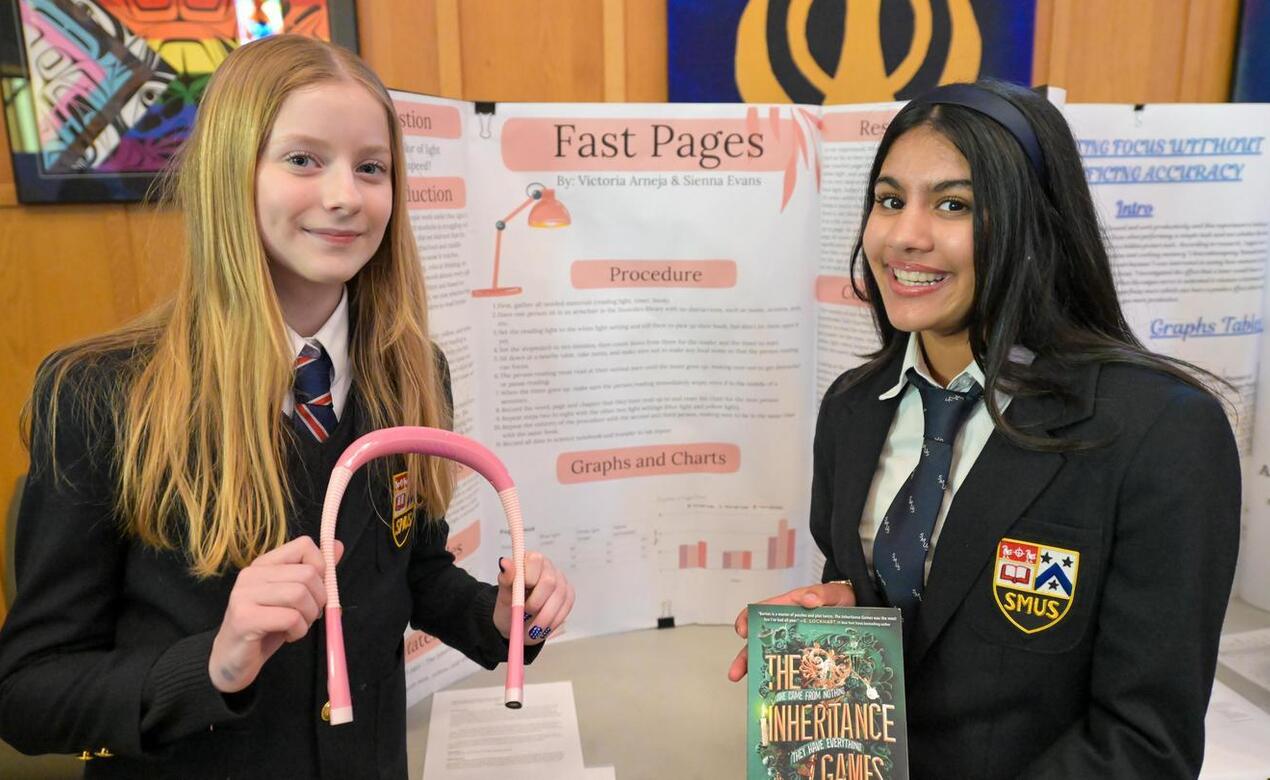
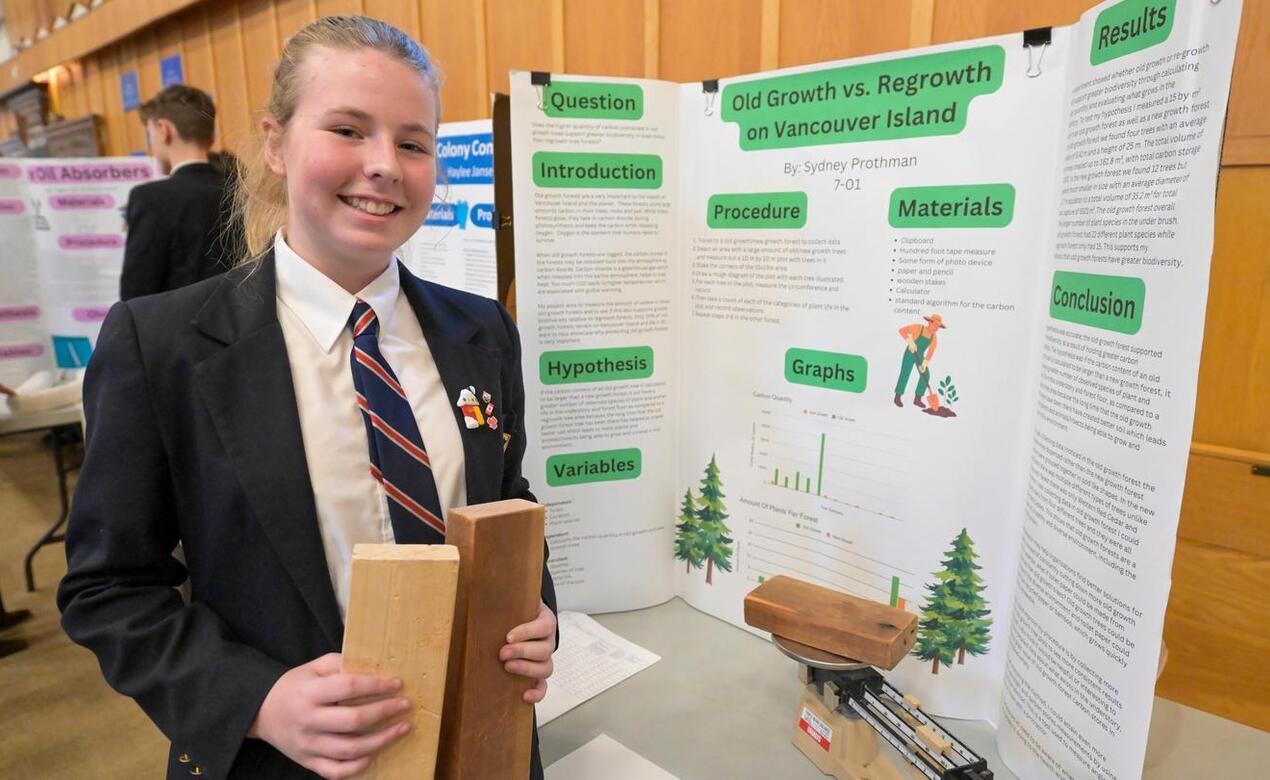
Environmental inquiry featured prominently throughout the fair. Students examined changing salinity levels in the ocean as indicators of climate patterns, investigated microplastics in beach sand and their potential impact on ecosystems, and tested oil-absorbing materials and emergency insulation options.
For Grade 7 students in particular, projects were structured around SMUS values such as sustainability, respect, and empathy. This framework encouraged students to connect scientific investigation with broader social and environmental responsibility.
One project used machine learning technology to create an AI-powered recyclable material detector, designed to help users quickly determine whether everyday objects belong in the recycling bin. Others tested the effectiveness of various water filtration systems, examined ways to reduce food waste, and explored how different growing conditions affect food production efficiency. Together, these projects reflected an understanding that scientific thinking can illuminate complex systems and inform responsible decision-making.
Engineering and Design in Action
Many students brought engineering principles to life through hands-on experimentation and design. One team recreated tsunami conditions on a small scale to examine how building shape affects impact resistance and found that rounded structures better withstood force. In another experiment, lemons and pickles were tested for voltage production. Although acidity was expected to produce stronger electricity, the electrolytes in pickles generated the greater charge.
Others moved from testing concepts to developing practical solutions. A backpack-mounted propeller system was designed to generate electricity in a survival situation, and another project featured a posture-sensing chair that alerts users when they begin to slouch.
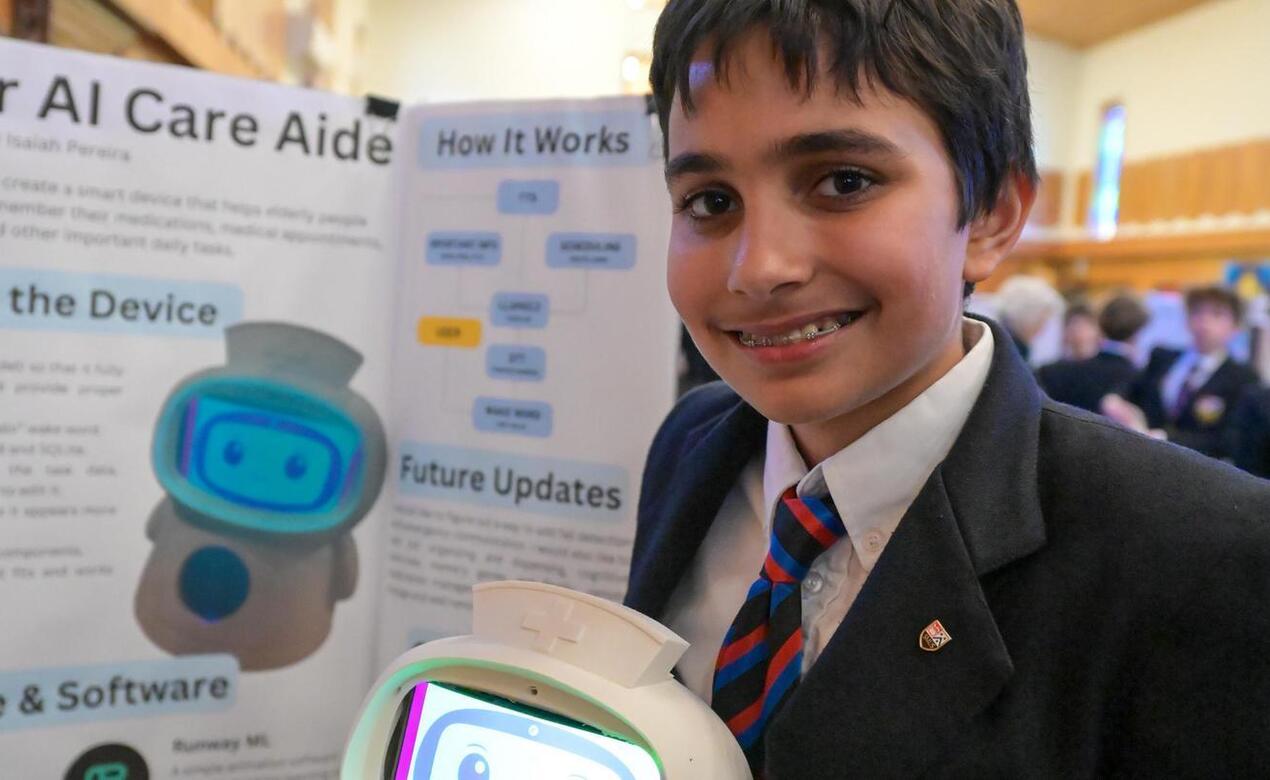
A particularly advanced project, Halo: Your AI Care Aide, demonstrated how engineering and artificial intelligence can intersect with empathy. Created by Isaiah Pereira, who won gold at last year’s Canada-Wide Science Fair for his invention The Smart Sleeper, a device that monitors bedroom conditions to improve sleep, the voice-programmable robot is designed to help seniors manage medication schedules independently.
“The Science Fair project is such a great experience because it really gives students the chance to be creative and be in charge of their learning,” said PE and Science teacher Graeme Hyde-Lay. “You can really see the difference in their engagement when they feel that sense of ownership.”
Across all projects, the common thread was not perfection, but process. Students asked meaningful questions, tested variables, revised assumptions, and experienced firsthand how careful thinking leads to insight. It is a lesson far more lasting than any single result.

Middle School Science Fair 2026

Middle School Science Fair 2026

Middle School Science Fair 2026

Middle School Science Fair 2026

Middle School Science Fair 2026

Middle School Science Fair 2026

Middle School Science Fair 2026

Middle School Science Fair 2026

Middle School Science Fair 2026

Middle School Science Fair 2026

Middle School Science Fair 2026

Middle School Science Fair 2026


