A picture book might seem like an unlikely starting point for a Grade 6 lesson about government, global history or human rights. But for St. Michaels University School Middle School Teacher-Librarian Sarah Bailey, these stories have become powerful tools for helping students understand the world around them.
Over the past several years, Bailey has worked alongside Middle School Humanities teachers to develop an approach to Social Studies that uses picture books to introduce complex topics, build background knowledge and encourage critical thinking.
Recently, Bailey and retired SMUS Humanities teacher Susana Vachon shared their work at a professional development conference in Vancouver, presenting to approximately 125 educators across two sessions.
The presentation, Engaging Middle Schoolers in Social Studies Concepts and Content Through Picture Books, highlighted an approach that has grown through years of collaboration and professional learning at SMUS.
Making Connections Through Stories
Each week, Grade 6 students visit the library to explore a different part of the world through carefully selected picture books. Lessons combine geography, vocabulary, historical context and discussion, helping students connect what they read to the world around them.
The books offer an accessible way to explore complex topics, from different forms of government to human rights and environmental issues.
"They make connections, they ask questions, they infer, and then they synthesize their information into some really powerful language," Bailey explained.
For Bailey, some of the most meaningful moments come when students make connections to their own lives.
During a recent lesson about China's history, one student reflected that he now better understood why his grandfather had attempted to escape the country many years earlier. It was a powerful example of how a classroom lesson could help a student better understand his own family history.
The approach draws on research into reading comprehension and cognitive development, along with educator Adrienne Gear's Powerful Thinking Strategies. It has been developed and refined through ongoing collaboration among Middle School teachers.
For Bailey, presenting the work to educators from across the province was a professional milestone and an opportunity to share something that has made a meaningful difference for SMUS students.
Welcoming Educators to SMUS
That exchange of ideas will continue on Monday, November 2, when SMUS hosts teacher-librarians from across the Independent Schools Association of British Columbia (ISABC) for a professional learning gathering across the school's three campuses.
Bailey is organizing the event alongside fellow SMUS teacher-librarians Kirsten Davel, from the Senior School, and Thea Wilson-Scorgie, from the Junior School.
The day will begin at the Snowden Library with a presentation from SMUS Indigenous Scholar Jo-Ina Young about Métis history and culture in British Columbia.
At the Middle School, visiting educators will explore the new Hayes Family Learning Commons and learn about its approach to organizing books by genre to help students discover new reading interests. Local bookstore Bolen Books will also host a sale featuring Métis literature.
"Our books are all set up by genres, and some teachers may not have seen it done like that yet," Bailey said. "We will talk about all the pros and cons of genrefying your library."
The gathering will conclude at the Junior School, where Wilson-Scorgie will share approaches to creating library spaces that support neurodivergent learners.
The Changing Role of School Libraries
For Bailey, the traditional idea of a school librarian checking books in and out represents only a small part of her work today.
As a literacy leader, she collaborates with teachers on curriculum and classroom lessons, helps students develop research and critical thinking skills, and provides additional learning support across the Middle School.
"I come into classes and help teachers with whatever they might need and work with small groups and students who need a little boost," Bailey said.
The new Hayes Family Learning Commons has also created more opportunities to connect with students. Its open, welcoming design allows students to gather, study, play games and seek support throughout the school day.
"This absolutely amazing new space has enhanced my role so much," Bailey said. "I can see [the students] all the way down the hall and they know I'm here to help them."
Bailey credits the collaboration and encouragement of her colleagues for helping bring the picture book program to life and giving her the confidence to share it with other educators.
As SMUS prepares to welcome teacher-librarians from other schools, the two events highlight the important role educators play not only in supporting their own students, but in sharing ideas and strengthening teaching practices beyond their classrooms.

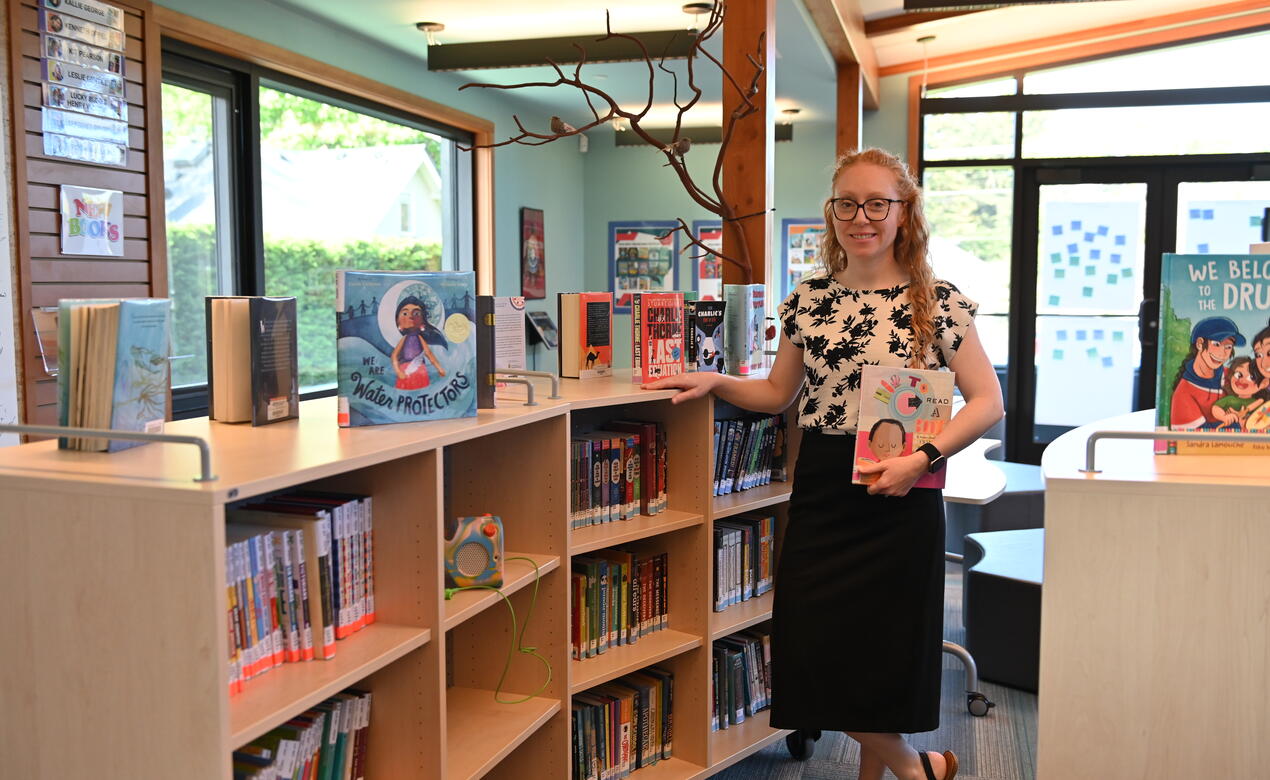
Thea Wilson-Scorgie in the SMUS Junior School library


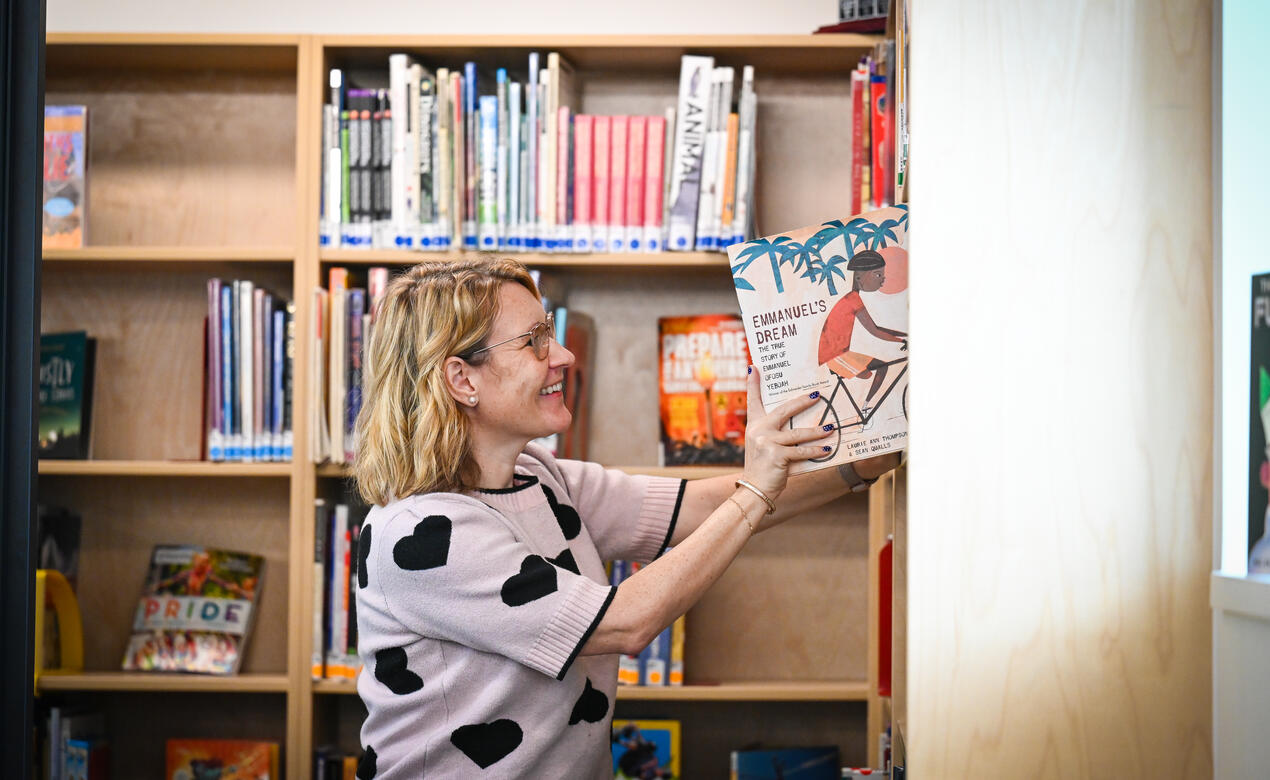
Sarah Bailey, Middle School Librarian, smiles behind a library desk displaying the picture books Emmanuel’s Dream, The Girl Who Heard the Music and Sparrow Girl.

Alicia Schlag and Kirsten Davel