

Since 2021, St. Michaels University School's Indigenous Scholars program has brought Indigenous knowledge holders, artists and educators into learning across the Junior, Middle and Senior Schools. Each year the list of scholars is shared, allowing faculty to consider how they might partner to bring that knowledge into their classrooms. Teachers propose opportunities and each collaboration grows out of what students are learning.
The first Indigenous Scholar at the school was Coast Salish artist Dylan Thomas of the Lyackson First Nation. His carved welcome sculptures and spindle whorls remain part of students' experiences on both campuses. Last year, composer Andrew Balfour brought Indigenous perspectives to the music program, and Gisele Martin connected students and staff to the land.
This year, SMUS welcomes Gisele Martin back, along with Dr. Kim Recalma-Clutesi and Jo-Ina Young. All three have previously spent time within the SMUS community and will have an opportunity to deepen those relationships through the 2026-27 school year.
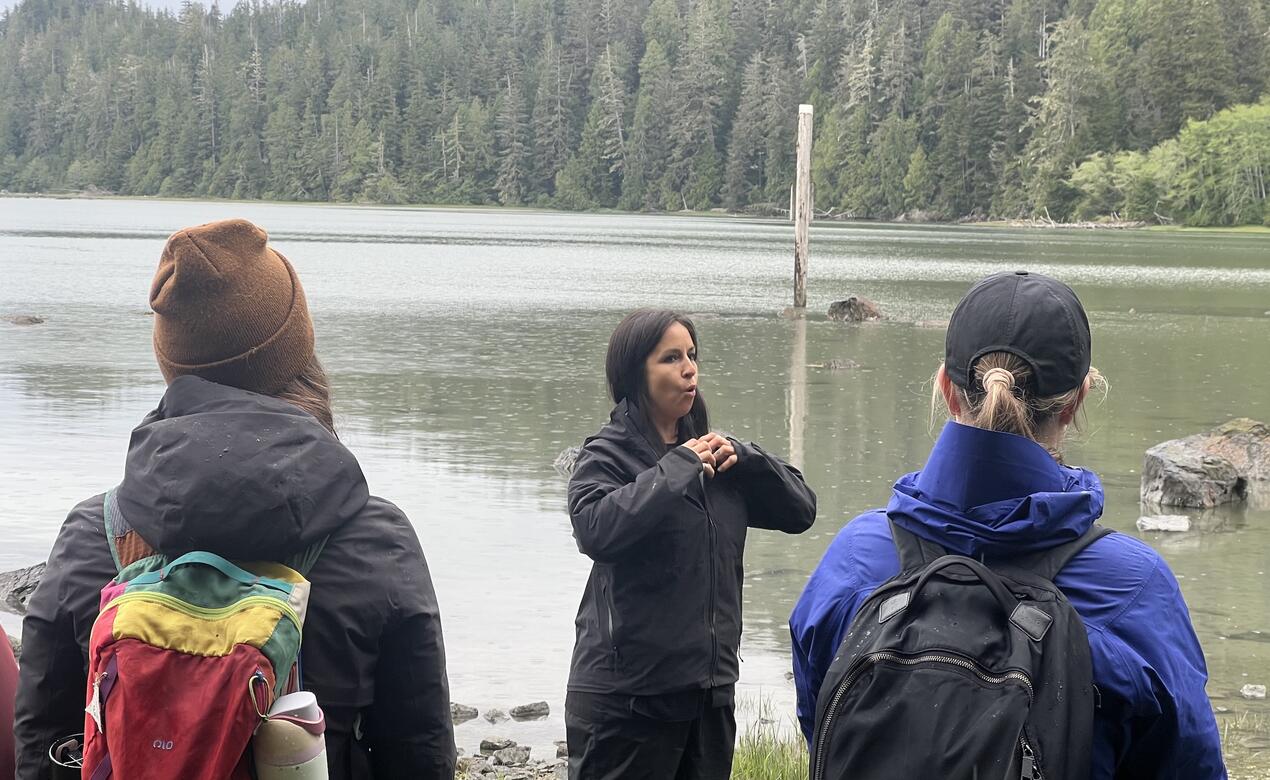
Gisele Martin
Gisele is a citizen of the Tla-o-qui-aht First Nation. She is a Nuu-chah-nulth language and culture activist, educator, storyteller, singer and composer. Through the Raincoast Education Society, Gisele runs Yucḥap Panač, which includes cultural outdoor field trips, ƛaʔuukʷiʔatḥ / Tla-o-qui-aht Language classes, cultural workshops, and traditional food security workshops in ƛaʔuukʷiʔatḥ / Tla-o-qui-aht and Ahousaht. A passionate advocate for the preservation, revitalization and transmission of traditional knowledge and languages, Gisele embodies the philosophy that land is the best university and one should never stop learning.
As an Indigenous Scholar last year, Gisele worked with students in Environmental Science, English First Peoples, Criminology, Outdoor Education and Choir classes. In May, she guided 15 staff and faculty through three days of land-based learning in Tla-o-qui-aht territory, including Meares Island's Big Tree Trail. Faculty and staff will have that same opportunity again this year.
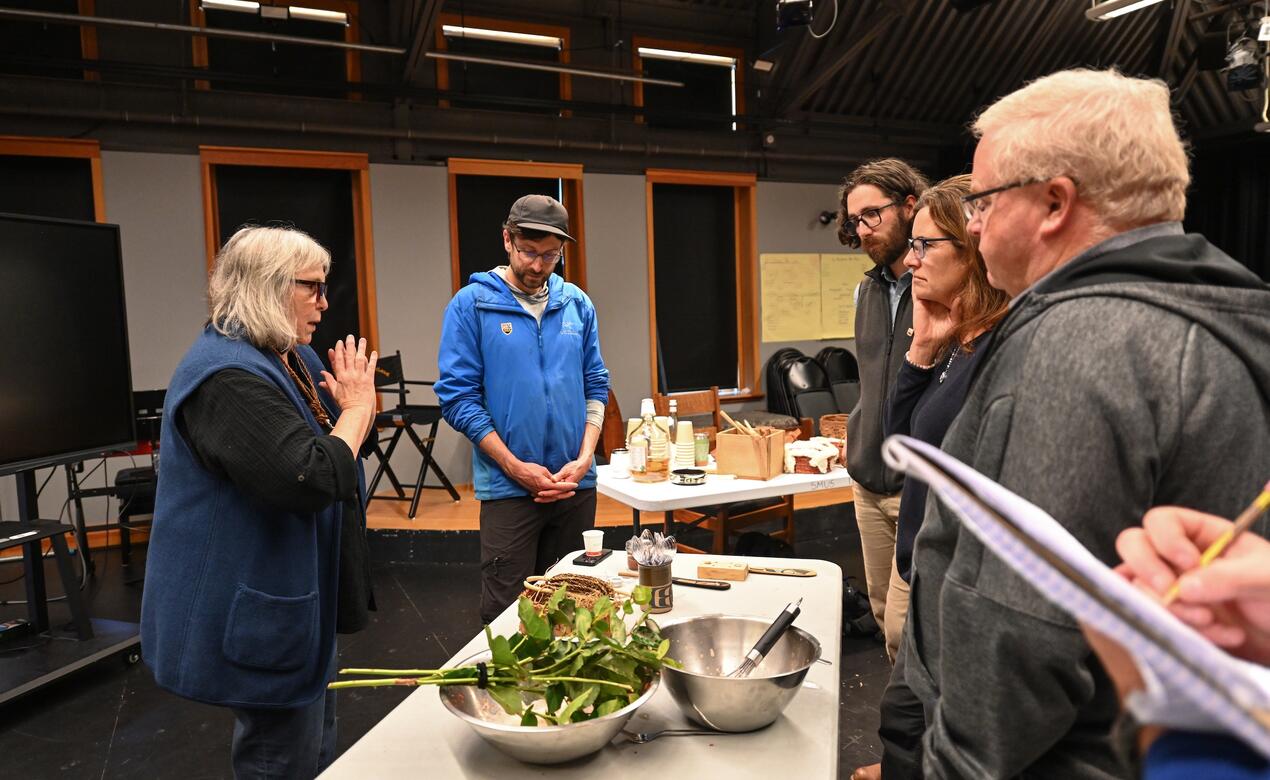
Dr. Kim Recalma-Clutesi, Ogwi'low'gwa
Kim is a member of the Qualicum First Nation on eastern Vancouver Island. Kim is the daughter of late Clan Chief Ewanuxdzi of Qualicum B.C. and a former Qualicum Chief herself. Through her father, she received an extensive political background during the Southern Vancouver Island Tribal Federation’s formative years, the R.A.V.E.N, the Union of B.C. Indian Chiefs and the Native Brotherhood. Her decades of work as an award-winning activist, political organizer, cross-cultural interpreter, teacher and academic researcher of ethnobotany collectively illustrate her commitment to strengthening Indigenous stewardship traditions and knowledge. In recognition of this work, she recently received her honorary doctorate from Simon Fraser University.
Throughout the years that Kim and Elder Bill White have worked with the school, several moments stand out. From the ceremonies to welcome Dylan Thomas’s spindle whorls, welcome post and welcome pole as part of SMUS to leading an ethnobotany workshop for faculty professional development alongside Dr. Nancy Turner, Kim has been an important guide for the School’s efforts in Indigenous connections.
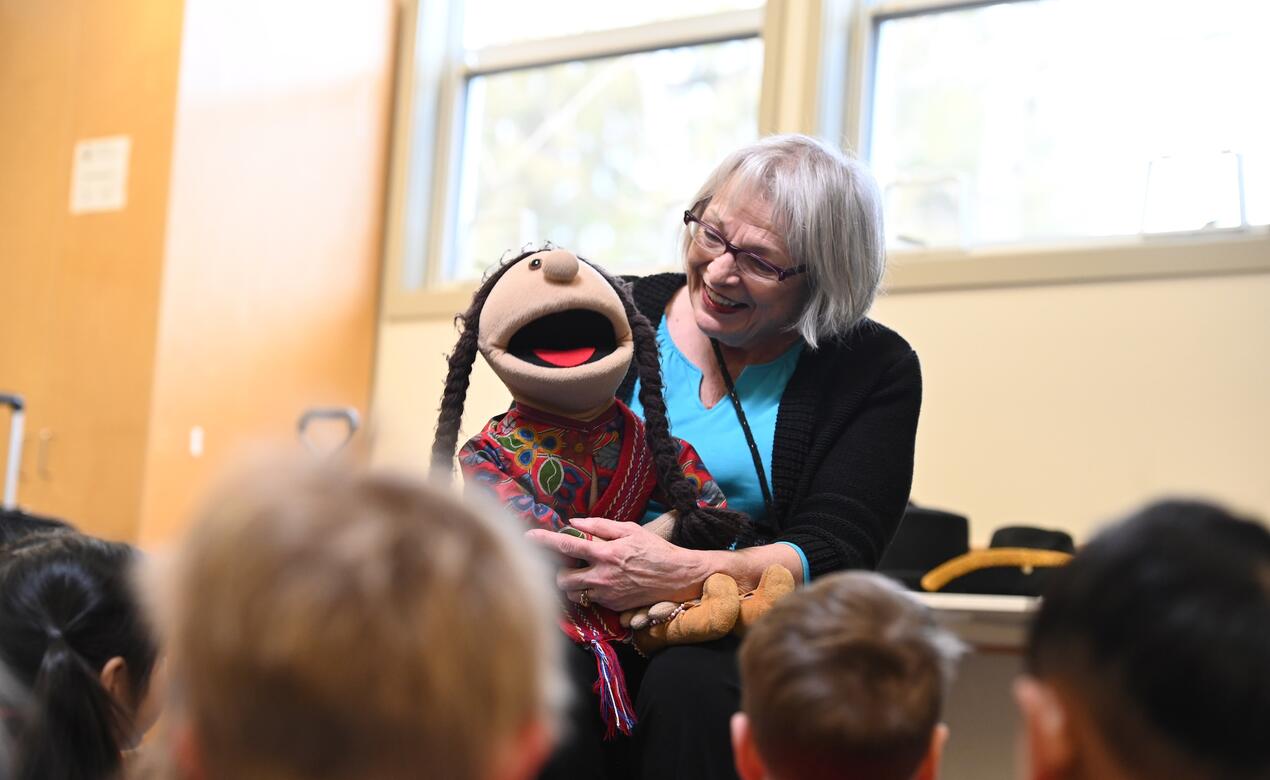
Jo-Ina Young
Jo-Ina is a proud Métis Elder, author, storyteller, ventriloquist, artist, and cultural teacher who has dedicated her life to sharing the richness of Métis culture with children, families, educators, and communities. Best known for bringing her Métis puppet, Rosie MacDougall, to life, she combines storytelling, humour, music, and hands-on activities to make learning engaging and memorable. Inspired by her own journey of discovering her Métis roots later in life, Jo-Ina encourages others to embrace their heritage with pride. Through her presentations, workshops, books, and creative projects, she helps ensure Métis stories, traditions, and knowledge continues to be shared with future generations.
Jo-Ina's memorable visits have reached students from Junior Kindergarten to Grade 12. She has brought the Prairies to life for several Junior School classes with puppets, song and artifacts; explored Métis history with Social Studies 9 and English First Peoples classes in Grade 10 to 12, and shared oral traditions with Grade 7 and 8 classes. Most recently, Grade 6 and 7 students explored furs, beadwork and Métis stories together.
Over the coming year, teachers across SMUS will work with Gisele, Kim and Jo-Ina to bring their knowledge into classrooms, and we look forward to sharing those stories as they unfold.


